Skip the Crowds: A Traveler’s Guide to Khiva
If you’re looking for a Central Asian experience that prioritizes genuine immersion over hurried sightseeing, Khiva warrants your attention. This isn’t a city that demands you rush from one grand monument to the next alongside large tour groups. Instead, it offers a quieter, more intimate journey into Silk Road history, allowing for detailed observation and photography without constant interruption. Khiva’s Ichon-Qala, its inner walled city, is so remarkably preserved that it functions as a living open-air museum, a distinct experience compared to its larger, more bustling Uzbek counterparts.
Here, the pace slows. You can spend hours simply wandering the narrow alleys, examining intricate tilework, and observing local life unfold against a backdrop of ancient brick. For those who appreciate history presented intact and a chance to truly absorb an atmosphere, Khiva provides a unique opportunity.
Morning Light in the Old City: Catching the Silence
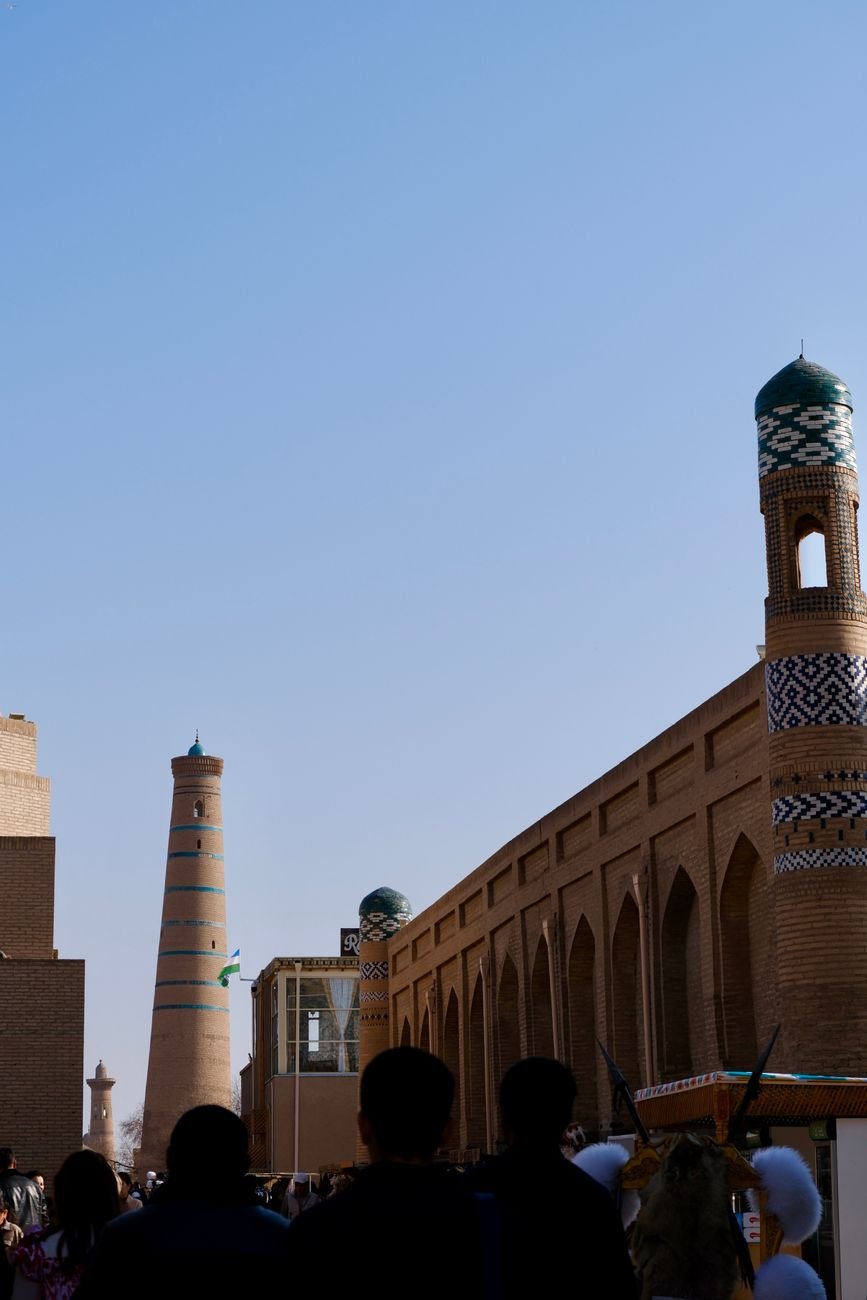
The early hours in Khiva are invaluable. Before the main tourist influx begins, typically around 9:00 AM, the Ichon-Qala belongs to the residents and the light. Head out shortly after sunrise, preferably between 6:00 AM and 7:30 AM, to witness the city’s ancient gates and minarets bathed in a soft, golden glow. The Kalt Minor minaret, with its striking unfinished turquoise tiles, is particularly impressive as the sun first strikes it, offering clean photographic lines without people in the frame.
This is the time to walk the main thoroughfares, usually bustling later in the day, in near solitude. The silence amplifies the scale of the mud-brick walls and the intricate details of the madrasahs. Consider an elevated view from a higher point, such as the North Gate (Boghcha Darvoza) or even some accessible rooftops, to capture the entire Ichon-Qala awakening under the gentle morning sun. Pay attention to the deep shadows cast by the minarets and walls, highlighting the city’s unique topography.
Midday Serenity: Courtyards and Covered Passages
As the sun climbs higher, and the central areas see more activity, shift your focus to the cooler, more shaded spaces. Many of Khiva’s madrasahs and mosques feature expansive interior courtyards that offer respite from the direct midday sun and provide excellent photographic opportunities with softer, indirect light. The Juma Mosque, with its forest of carved wooden pillars, creates a captivating play of light and shadow, best appreciated when the sun is higher and streams through its skylights.
Seek out the artisan workshops and small museums tucked away in former caravanserai. These spaces, often dimly lit, present a different texture of Khiva – intricate carvings, traditional textiles, and local crafts. This is also a good time to explore the covered bazaar areas, where the diffused light lends itself well to capturing candid moments of local trade and daily life, far removed from the feeling of a staged historical attraction.
Afternoon Shadows and Panoramic Views
Late afternoon, typically from 4:00 PM onwards, brings longer shadows and a warmer light that enhances the earthy tones of Khiva’s architecture. This is an ideal time to ascend the city walls, particularly near the West Gate (Ota Darvoza) or the North Gate, for panoramic views over the entire Ichon-Qala. From these vantage points, you can fully appreciate the density of the historical structures, the uniformity of the traditional mud-brick houses, and the towering minarets puncturing the skyline.
The changing light against the smooth, rounded forms of monuments like the Pakhlavan Makhmud Mausoleum dome or the Islam Khodja Minaret provides excellent contrast. As the sun dips lower, the entire city begins to glow with a deep orange hue. Position yourself to capture the sun setting behind the western wall, casting dramatic silhouettes of the architectural marvels against the twilight sky.
Evening Glow: Quiet Reflection After Dark
Once the sun has set and day-trippers depart, Khiva transforms again. The Ichon-Qala becomes remarkably quiet, and many of the key monuments are illuminated, offering a completely different aesthetic. From 7:00 PM onwards, take a leisurely stroll through the main square and along the illuminated pathways. The Kalt Minor, Islam Khodja Minaret, and various madrasahs are beautifully lit, creating a magical atmosphere.
This is a time for reflection, not just photography. The lack of crowds allows for a profound sense of stepping back in time. While some cafes and restaurants remain open, the overall ambiance is one of tranquility. Capture the long exposures of the lit monuments against the deep blue twilight sky or the star-filled night, a stark contrast to the daytime bustle in other more visited Silk Road cities.
Practical Basics
Best Time to Visit
The most favorable time for a visit to Khiva is generally from April to June. During these months, the weather is pleasantly warm, ideal for walking and exploring the extensive open-air sites without the extreme heat of summer or the cold of winter. The clear skies are also excellent for photography.
Getting There
Khiva is accessible, though it requires some planning. The nearest airport is in Urgench (UGC), approximately 30 kilometers away. From Urgench, taxis are the primary mode of transport into Khiva. For rail travelers, modern high-speed trains connect Tashkent to Khiva, though often with a change or connection point in Urgench. It is advisable to book train tickets well in advance, particularly during peak travel seasons, to ensure availability.
Getting Around
The Ichon-Qala, Khiva’s historic walled city, is entirely walkable. No internal transport is needed within the walls; indeed, it’s largely pedestrianized. Wear comfortable walking shoes, as you will be covering significant distances on uneven cobblestones and ancient pathways. To access points outside the Ichon-Qala, local taxis are readily available.
Accommodation
Accommodation options range from guesthouses within the Ichon-Qala, often in beautifully renovated traditional homes, to hotels just outside the city walls. Staying within the walls offers the convenience of immediate access to all the historical sites and the unique experience of being part of the living museum. Book accommodations ahead of time, especially if traveling during the peak spring season.
Costs and Currency
Uzbekistan uses the Uzbekistani Som (UZS). While costs for accommodation and tours can be comparable to other destinations, day-to-day expenses like food and local transport are generally quite affordable. Always carry smaller denominations of Som for markets and street vendors. While credit cards are accepted in larger hotels and some restaurants, cash is king for most smaller purchases and is essential outside major establishments. Be prepared to negotiate prices in bazaars, as is common practice.
Safety and Precautions
Uzbekistan is generally considered a safe country for tourists. However, standard travel precautions apply. Be aware of your surroundings, especially in crowded areas or after dark, though the Ichon-Qala is usually peaceful in the evenings. Keep valuables secure and out of sight. It is prudent to have travel insurance that covers medical emergencies and trip cancellations. Drink bottled water to avoid stomach upsets, and protect yourself from the sun, especially during the midday hours, with hats and sunscreen.
Visa Information
Visa requirements for Uzbekistan vary by nationality. Many countries now benefit from visa-free entry for certain periods, while others may require an e-visa or a traditional visa obtained in advance. Always check the latest visa regulations specific to your nationality with the official Uzbek government websites or your nearest embassy well before your planned travel date.
Summary
Khiva offers a tangible journey back in time, distinct from the grander, often busier spectacles of Samarkand or Bukhara. It rewards the traveler who seeks depth, quiet contemplation, and the opportunity to engage with history on a more personal scale. For those ready to step away from the usual itinerary and experience a truly preserved Silk Road city, Khiva is an unparalleled choice. It is a destination that truly comes alive when observed slowly, allowing its ancient beauty to unfold under varying lights and at different moments of the day.
Plan your trip with TourZen.in – real itineraries, trusted local experts, one simple conversation.
Image by: Rüveyda Akkaya\nhttps://www.pexels.com/@mihman