Off the Map: A First Look at Nafplio
I’ll be honest, when I first read that Nafplio was Greece’s inaugural capital, before Athens took the reins, my eyebrows practically shot off my head. My mental image of Greece has always been, well, Athens, or some impossibly white island. A Venetian-era town in the Peloponnese, a former capital? It sounded like something conjured from a history textbook rather than a place you’d actually go. My expectations were low, a sort of polite historical curiosity.
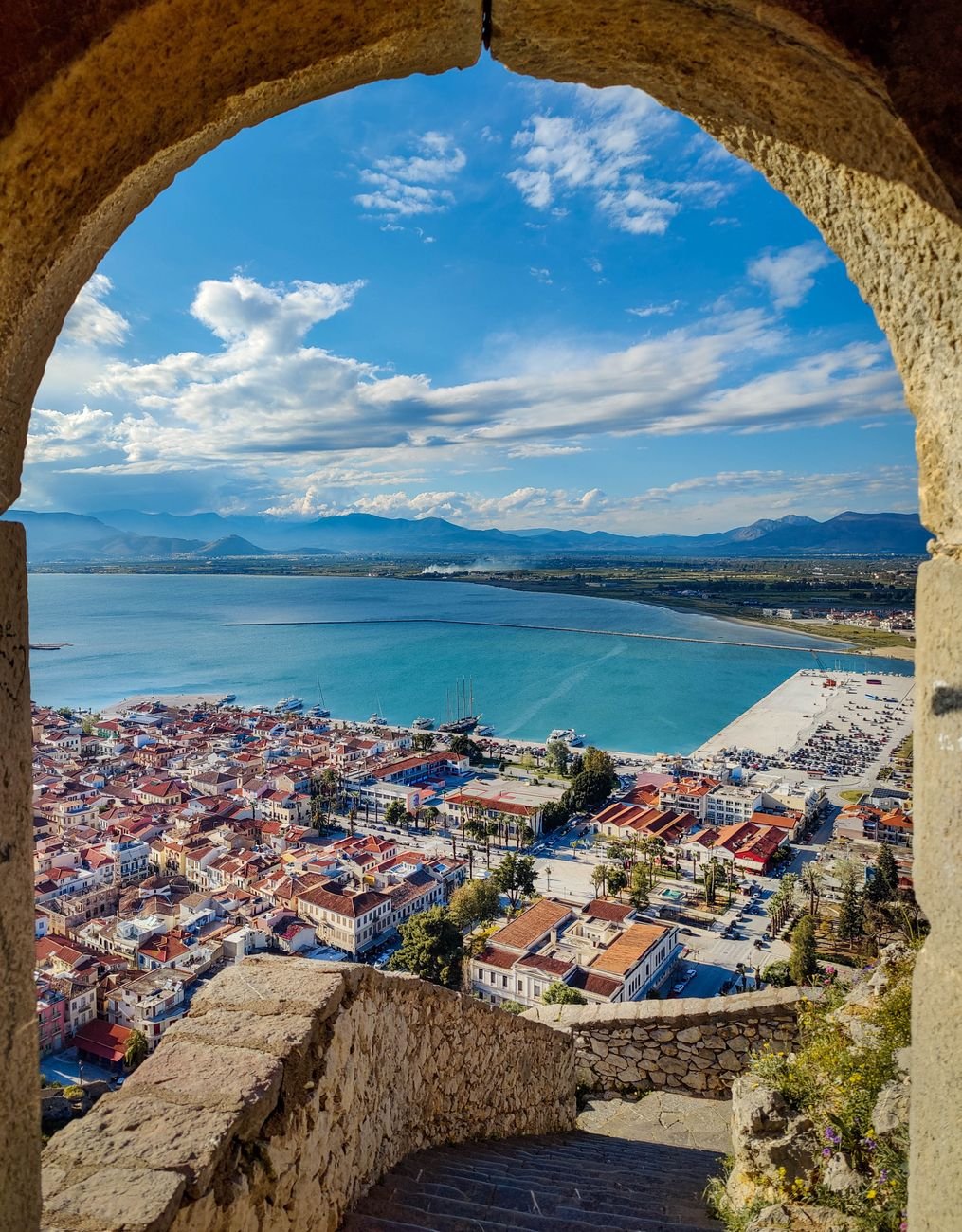
Walking through the old town, however, those expectations crumbled faster than a stale koulouri. It doesn’t scream ‘ancient capital’; it whispers ‘elegant European secret.’ The buildings are painted in sun-faded ochre and terracotta, draped with bougainvillea so vivid it hurts your eyes. It’s not the stark white and blue I’d braced myself for, nor the relentless clamour of a sprawling modern city. It’s softer, more intimate, a town that feels perfectly content in its own skin.
The Morning Ritual
My first full morning started with the clatter of café chairs on cobblestones and the murmur of Greek voices. No blaring pop music, no aggressive touts. Just the scent of strong coffee and a faint whiff of sea salt carried in from the Argolic Gulf. I had pictured a tourist trap, a place trying too hard to sell its history. Instead, I found a town that just *is*. Locals sipped their espressos, reading newspapers, oblivious to the fact that they were living in what felt like a perfectly preserved painting.
I watched an elderly man carefully arrange fruit in front of his small shop, each orange a polished gem. This wasn’t a performance for visitors; it was just life. It reminded me that sometimes, the places with the most significant pasts wear them with the quietest grace. The Palamidi fortress, perched high above, seemed to keep a silent, watchful eye over everything, a constant reminder of layered histories, without ever demanding attention.
Staircases and Surprises
Nafplio, I quickly discovered, is a town of staircases. Everywhere you turn, another set of worn stone steps leads somewhere intriguing – to a tiny art gallery, a boutique selling local crafts, or just a residential street with potted plants and sleeping cats. Each ascent offered a slightly different perspective of the harbour and the tiny, picturesque Bourtzi castle out in the water.
I’d imagined a dusty, museum-like quality to a place so steeped in the past. But Nafplio is anything but. It has a vibrancy, a pulse that feels entirely contemporary, without ever feeling jarring. The blend of Venetian architecture with Ottoman influences and later neoclassical additions creates a visual feast that’s genuinely unique in Greece. It’s a place that rewards wandering, where getting a little lost is half the fun.
On the Water’s Edge
Evenings were spent down by the promenade, watching the fishing boats bob gently in the harbour. The air cooled, and the lights of the Bourtzi castle twinkled. I’d expected the usual tourist menus, a bland array of Greek standards. And while those were available, a little exploration led to tavernas serving surprisingly inventive takes on local seafood, often with a view that felt like it belonged in a much more expensive postcard.
It’s the simple things here that leave the lasting impression. The way the sunset paints the fortress walls in hues of orange and purple. The distant chime of a church bell. The laughter from a family sharing a meal. These aren’t the dramatic, ‘wow’ moments you see splashed across Instagram, but rather a slow, comfortable immersion into a way of life that feels wonderfully authentic.
Practical Basics, Naturally
If you’re thinking of making the trip (and, frankly, you should be), timing is everything. My initial thought was to brave the summer crowds, but I was advised otherwise, and I’m glad I listened. The sweet spots are genuinely **April to June** and then again in **September to October**. The weather is divine – warm, but without that oppressive mid-summer heat that makes exploring anything but a beach feel like a chore. Plus, you avoid the thickest of the tourist crush, which, for a place like Nafplio, is a definite win.
Getting around is mostly on foot, which is glorious. The old town is compact, and walking through its narrow streets is the best way to soak it all in. As for safety, it felt incredibly secure; walking alone at night was never a concern, much like most small European towns. In terms of cost, Nafplio sits comfortably in the mid-range. It’s not the budget-backpacker haven of some Eastern European cities, but it’s certainly more affordable than, say, the super-touristed islands. You can find charming accommodation and excellent meals without feeling like you’re constantly emptying your wallet. As a European Union member, standard Schengen visa rules apply, so a little pre-planning depending on your passport is always a good idea.
Summary
Nafplio isn’t a destination that screams for attention, and that, I think, is its greatest charm. I went in expecting a footnote in Greek history, perhaps a pleasant enough day trip. What I found was a town that effortlessly combines history, natural beauty, and a laid-back European sophistication. It doesn’t rely on grand statements or a curated ‘experience’; it just exists, beautifully. It’s the kind of place you arrive at with a mental checklist, only to toss it aside and just… be. And in today’s travel landscape, finding a place that can do that, without even trying, is a rare and wonderful thing.
Plan your trip with TourZen.in – real itineraries, trusted local experts, one simple conversation.
Image by: Alexandros Milidakis\nhttps://www.pexels.com/@alexandros-milidakis-559640413