Off the Map: A First Look at Mostar
There are some places that etch themselves onto your memory not with grand gestures, but with the quiet drama of a recurring moment. Mostar, for me, is one such place. The first time I saw the Stari Most, the Old Bridge, it was late afternoon, and the sun was softening the ancient stone to a warm ochre. The Neretva River below, a startling shade of emerald, whispered secrets as it flowed. All around, the sounds of the Old Town – a murmur of conversation, the distant clatter of a coffee cup, the soft scuff of shoes on worn cobbles – seemed to hold their breath.
Then, a figure emerges on the bridge’s arch, silhouetted against the sky. A young man, a diver from the Mostar Diving Club, takes his place on the railing. There’s a hush that falls, a collective anticipation. He stands there for a beat, two beats, gathering the spirit of generations before him who have made this same leap. It’s more than a spectacle; it’s a living tradition, a defiance of time, a deep connection to the river and the very soul of Mostar. And then, with a clean, breathtaking arc, he plunges into the icy green waters below, leaving only ripples and a profound sense of awe in his wake.
The Rhythm of the River and the Stone
To wander the cobbled lanes of Mostar is to step into a rhythm that feels both ancient and deeply, gracefully alive. The Stari Most is not merely a bridge; it is the beating heart of the city, connecting two halves, two cultures, two histories. As I sit at a small café, sipping strong Bosnian coffee, I watch the light shift on its elegant curve throughout the day. In the morning, it’s sharp and defined; by dusk, it’s bathed in a golden glow, casting long shadows that dance on the river.
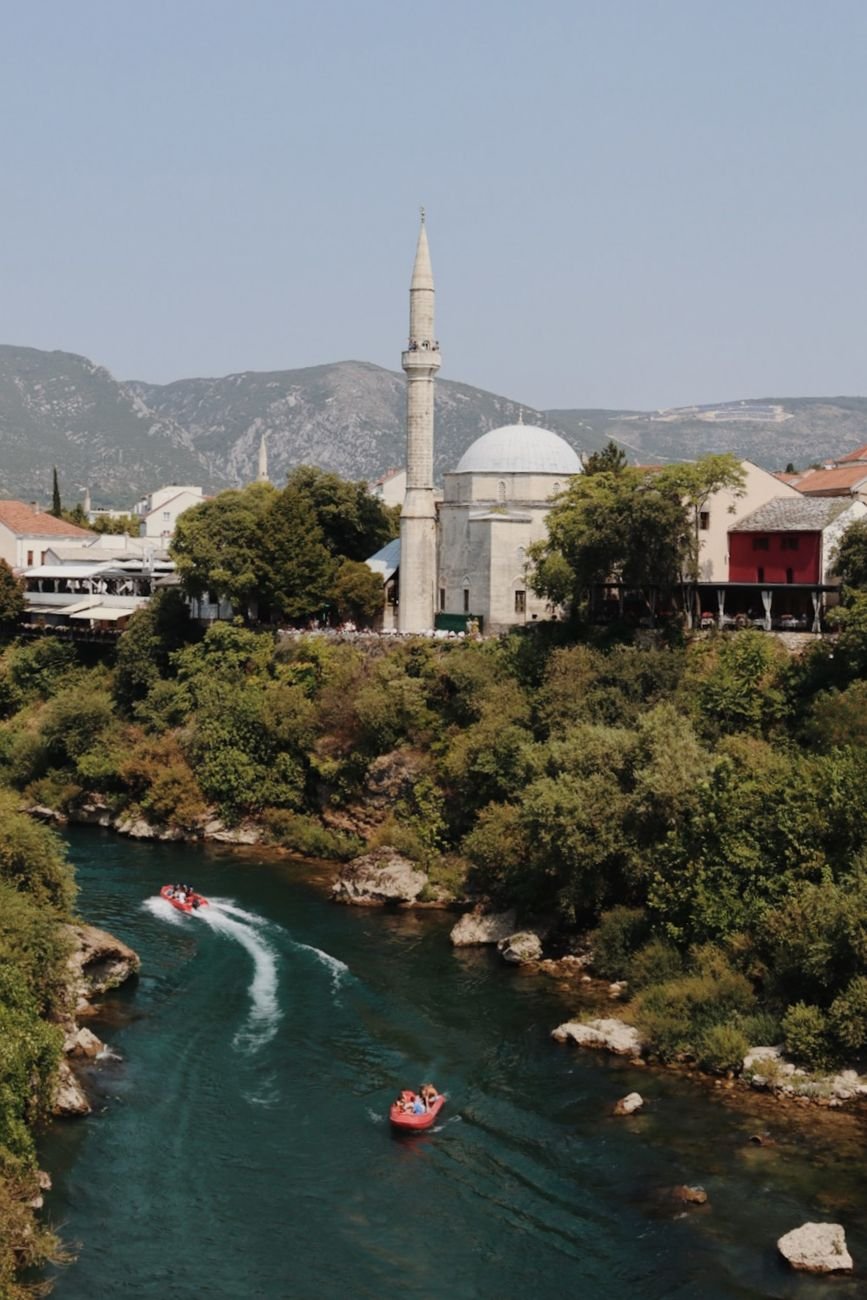
The sounds here are distinctive: the gentle rush of the Neretva, the calls of the divers soliciting contributions before their next daring jump, the melodic chime from a nearby mosque, the soft hum of daily life from the bazaar. There’s a particular scent too, a blend of roasted coffee, grilled meats, and the damp coolness rising from the river, all mingled with the faint, sweet perfume of jasmine from hidden courtyards in summer.
A Tapestry of Histories, Gently Woven
Mostar is a place that has known both beauty and profound sorrow, and carries both with quiet dignity. The bridge, lovingly rebuilt after the conflicts of the 1990s, stands as a testament to resilience, a symbol of hope and reconnection. Its very presence invites reflection on the passage of time, on memory, and on the enduring human spirit.
The Ottoman influence is everywhere, palpable in the architecture of the Old Town – the low-slung stone houses, the quaint artisan shops, the slender minarets piercing the sky. Each cobblestone, each archway seems to whisper stories of centuries past. Yet, it’s not a city stuck in history; it’s a vibrant, living place where tradition breathes alongside contemporary life, where families gather in sun-drenched squares and children play near ancient fountains.
Moments to Linger Over
For the traveler who savors moments rather than rushes through checklists, Mostar offers a gentle invitation. Spend an afternoon simply losing yourself in the labyrinthine alleys of the Old Bazaar (Kujundžiluk), where coppersmiths still hammer intricate designs, and artisans display vibrant textiles and delicate jewelry. Watch their hands, observe the steady rhythm of their work – it’s a living craft that speaks volumes without a single word.
Find a quiet spot overlooking the Neretva, perhaps at one of the small restaurants tucked into the banks, and let the river’s ceaseless flow calm your spirit. The local cuisine is a delight, hearty and comforting. Try a plate of ćevapi with fresh bread, or a rich Bosnian stew. Don’t forget to seek out a traditional sweet, like tufahija, an apple stuffed with walnuts and cream, a perfect end to a slow, thoughtful meal.
Practical Basics for a Gentle Journey
Mostar is at its most enchanting during the shoulder seasons, from April to May and again from September to October. The weather is pleasantly warm without the intense heat of high summer, and the crowds are noticeably thinner, allowing for a more intimate exploration of the Old Town. While the summer months (June-August) are also lovely, they bring more visitors, which can make the narrow lanes feel a little less serene. Even during peak season, the mornings and evenings offer a chance to experience the city at a quieter pace.
Bosnia and Herzegovina is generally considered a safe country for travelers, and Mostar, in particular, has a welcoming atmosphere. As with any travel, common sense precautions apply – be aware of your belongings in crowded areas. The local currency is the Convertible Mark (BAM), and while many places accept euros, it’s always good to have some local currency, especially for smaller purchases in the bazaar. Compared to many Western European destinations, Mostar offers excellent value for money, making it an appealing choice for a budget-conscious yet rich travel experience.
No special permits or specific vaccinations are typically required for visitors to Mostar, but it is always wise to check the latest entry requirements and health advisories before you travel. Once there, the Old Town is best explored on foot, its compact size making it perfect for unhurried wanders.
A Quiet Invitation
Mostar is more than just a destination with a beautiful bridge; it’s an experience that encourages you to slow down, to observe, to listen, and to feel the quiet pulse of a place that has rebuilt itself with grace and resilience. It invites you to participate in its living history, to witness the quiet courage of its traditions, and to simply be present amidst its timeless beauty. It leaves you not with a list of sights checked off, but with a feeling of deep connection, a sense of having truly arrived.
Dreaming of India, or the world beyond it? TourZen.in plans it all with real itineraries. Message us on +91 70257 57330.
Image by: iramezatil\nhttps://www.pexels.com/@iramezatil-739231740