Off the Map: A First Look at Carcassonne
Let’s be honest, you’ve probably never heard of Carcassonne. Before my trip, I certainly hadn’t, and what little I found online gave me the distinct impression it was just another pretty French town with a castle. My expectations were, shall we say, comfortably low. Yet, there it stands, a colossal, double-walled medieval citadel in southern France, a fortress so immense it’s considered among the largest fortified towns still standing anywhere in Europe. It’s an imposing, almost unbelievable sight, and one that absolutely blew my preconceived notions right out of the water.
Why It’s Been Overlooked
Perhaps it’s because France has an embarrassment of riches when it comes to historical sites. Or maybe, from a distance, the internet photos just don’t do justice to the sheer scale of Carcassonne. When I first saw pictures, I thought, “Alright, a walled city. Cute.” It looked like a postcard, neat and tidy, almost too perfect to be truly interesting. I figured it’d be a quick half-day visit, a tick on the ‘seen a medieval town’ list, followed by a slightly overpriced lunch in a quaint square.
I also suspect its location plays a part. It’s not on the direct, well-worn path between Paris and Nice, or the glamorous Riviera. Carcassonne sits in the Occitanie region, a corner of France that, while stunning, often gets overshadowed by its more famous neighbours. You have to *want* to go to Carcassonne; it’s not typically a drive-by attraction. This isolation, ironically, might be its saving grace, keeping it from becoming quite as swamped as some of Europe’s other historical gems.
My initial internal monologue was a series of eye-rolls. “Oh, look, another fortified city. What’s so special about *this* one?” The online chatter rarely conveyed the monumental reality. It felt like something that had been meticulously restored, perhaps to the point of being a bit sterile. I genuinely expected a theme park version of history, polished and packaged for easy consumption, rather than a place that still hums with centuries of actual living and defending.
What Makes It Worth the Detour
Stepping through the Porte Narbonnaise, one of the main gates, was the moment I realised just how wrong I’d been. The scale is monumental. It’s not just a castle; it’s an entire world contained within those formidable double walls, 52 towers strong. Forget what you think you know about medieval fortifications from movies or other, smaller sites. Carcassonne is on another level entirely.
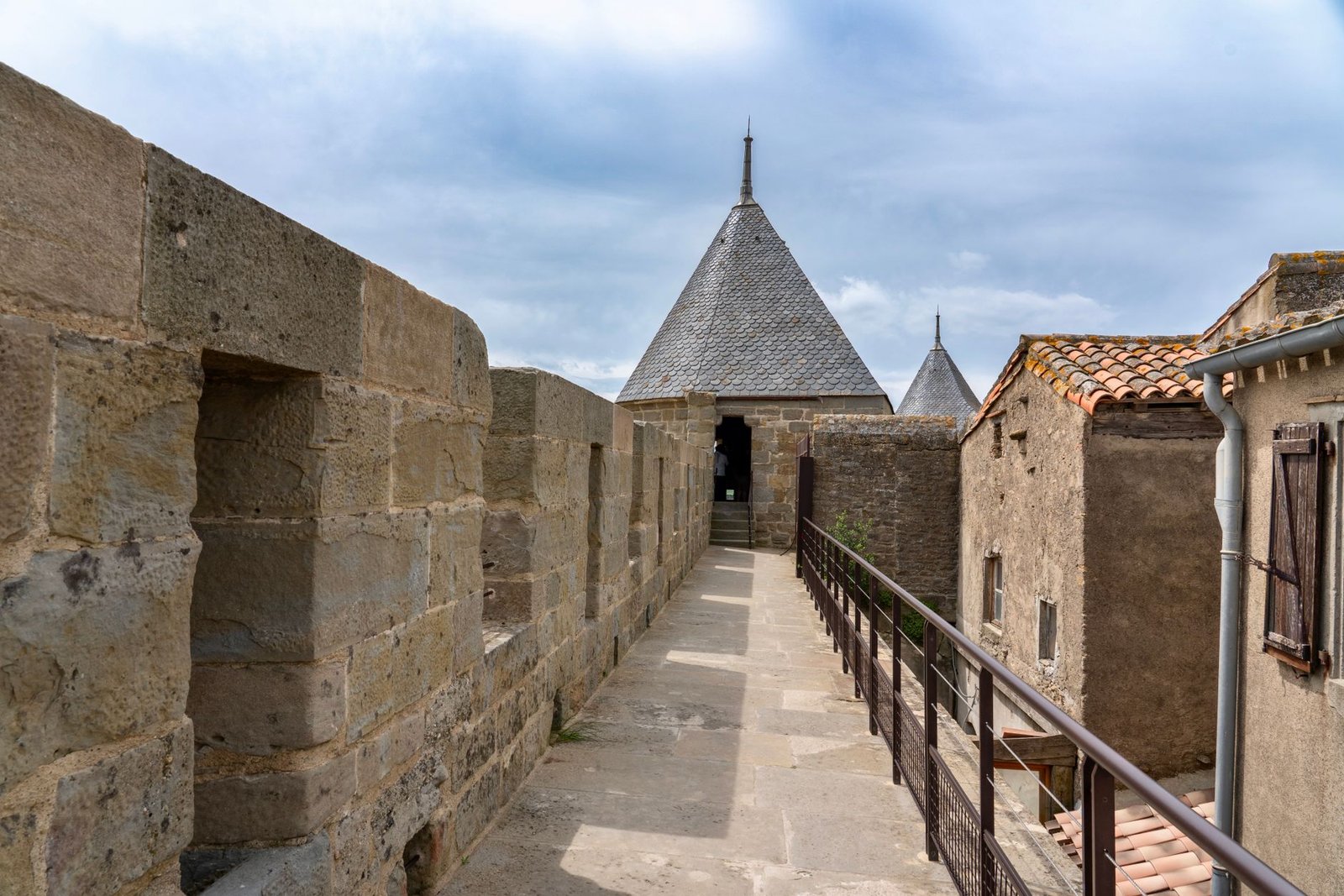
The first thing that hits you is the sheer, unyielding stone. Ramparts stretch as far as the eye can see, and the inner and outer walls create these fascinating, winding passages that are just begging to be explored. My low expectations meant I was genuinely floored by the sense of history that permeates every cobblestone. This isn’t just a reconstruction; it’s a place that has seen sieges, crusades, and centuries of daily life play out within its confines.
I spent hours just wandering. The narrow, winding streets within the citadel, known as La Cité, are packed with character. Yes, there are the inevitable souvenir shops and restaurants, but they don’t detract from the atmosphere as much as I feared they would. Instead, they feel like a natural part of a living, breathing town. You can duck into a tiny church, admire the stained glass, or just find a quiet corner to watch the light play off the ancient stones.
The Château Comtal, the count’s castle within the citadel, is another highlight. It offers panoramic views from its battlements that truly allow you to grasp the strategic brilliance of Carcassonne’s design. From up there, you see the full sweep of the outer walls, the dry moat, and the surrounding countryside—it’s an almost perfect vantage point to appreciate what an impenetrable fortress this once was. I’d expected a quick walk-through, but found myself lingering, trying to imagine the lives lived within those walls.
And then there’s the feeling at night. The citadel, beautifully illuminated, transforms into something even more magical. My cynical side expected it to feel like a manufactured spectacle, but it genuinely casts a spell. Walking the ramparts as dusk settles, with the lights glowing against the deep blue sky, made me feel like I’d genuinely stepped back in time. It wasn’t just a pretty sight; it was genuinely atmospheric and, dare I say, moving.
Beyond the main citadel, the “Ville Basse,” or lower town, offers a different, more contemporary French experience. It’s a pleasant contrast after immersing yourself in medieval history, with its own markets, shops, and restaurants. It reminded me that Carcassonne isn’t just a monument; it’s a modern city with a profound historical heart.
Practical Basics
If you’re considering a trip, I’d strongly recommend visiting during the shoulder seasons. April to June or September to October are ideal. The weather is generally pleasant, and you avoid the intense heat and larger crowds of the peak summer months. France is part of the Schengen Area, so standard European visa regulations apply. In terms of safety, Carcassonne is generally a very safe destination, much like most of rural France, though common sense regarding personal belongings is always advised, particularly in crowded tourist areas.
Costs are typical for regional France. While prices within La Cité can be a little higher due to its tourist appeal, the Ville Basse offers more options that are easier on the wallet. Accommodation ranges from charming boutique hotels within the walls to more budget-friendly options outside. Getting there is straightforward; Carcassonne has its own airport with connections to various European cities, and it’s well-connected by train, making it an achievable detour on a wider French itinerary.
Summary
So, Carcassonne. I went in expecting little more than a slightly touristy, perhaps even a bit dull, medieval experience. What I got was a genuinely awe-inspiring, historically rich, and surprisingly immersive journey into one of Europe’s most impressive fortified cities. It’s not just a collection of old stones; it’s a place that still hums with the echoes of history, waiting to prove every one of your low expectations gloriously wrong. Don’t be like me and dismiss it before you go. This place demands and deserves your attention.
Plan your trip with TourZen.in – real itineraries, trusted local experts, one simple conversation.
Image by: Susanne Jutzeler, suju-foto\nhttps://www.pexels.com/@suju