Off the Map: A First Look at Batanes
The descent felt like easing into a painting I’d only ever imagined. One moment, the familiar cerulean expanse of the Philippine Sea, the next, a sweep of impossibly verdant hills unfolding beneath the plane. Not the jagged volcanic peaks or the dense, humid rainforests I’d come to associate with this archipelago, but something entirely different, something almost… Celtic in its gentle, rolling undulations. It was a landscape that whispered of ancient earth, of windswept stories, and a people forged by both land and sea.
Stepping out onto the tarmac of Basco, the air itself felt different – clean, crisp, carrying the faint tang of salt and damp earth. There’s a quietude here, a profound sense of peace that wraps around you the moment your feet touch the ground. This isn’t just another island; it feels like an entirely separate realm, a forgotten chapter in a well-loved book, waiting to be reread. The iconic Ivatan stone houses, with their thick walls and cogon grass roofs, seem to grow organically from the earth, blending seamlessly with the dramatic cliffs and the endless horizon. They are monuments to resilience, these homes, crafted to withstand the whims of the strongest typhoons, reflecting the unyielding spirit of the people who built them.
First Impressions: A Land Apart
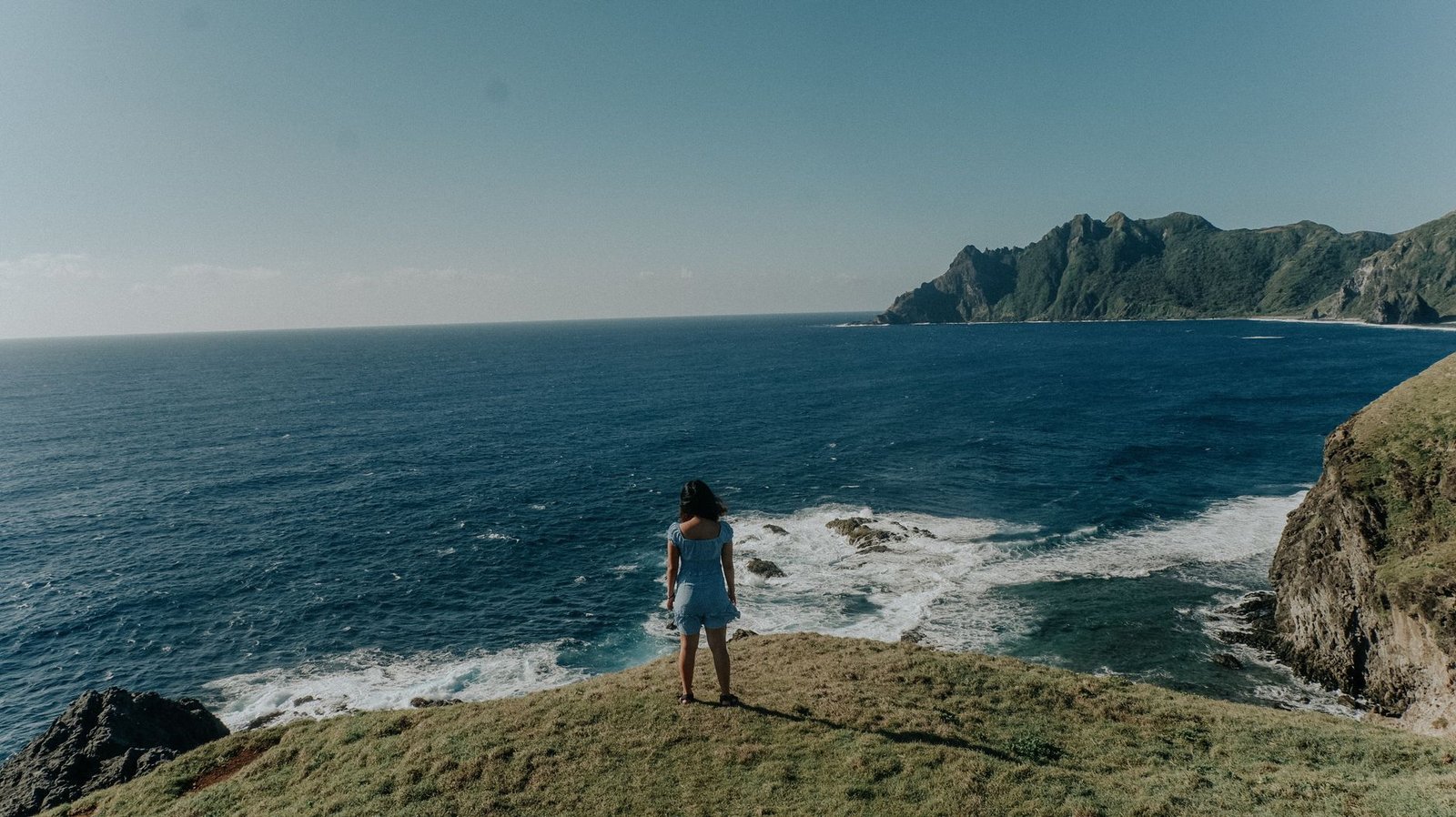
The journey from the airport to our lodging was a symphony of first impressions. Every turn revealed another vista more breathtaking than the last. The “rolling green hills” that were promised delivered far beyond expectation, blanketed in a richness of green I’ve rarely encountered, even in the most fertile parts of the world. They tumble down to meet the sheer cliffs, where waves crash in a rhythmic, ancient chorus. It’s a stark, beautiful contrast – the softness of the land against the raw power of the ocean.
The Ivatan people, with their gentle smiles and quiet dignity, are as much a part of this landscape as the stones and the sea. Their dialect, their customs, even their very way of life, feels rooted in a deep respect for their environment and a profound connection to their heritage. I noticed small details: the ingenious systems for collecting rainwater, the communal spirit evident in the way fields are tended, the stories etched into the faces of the elders. This is a place where history isn’t just preserved in museums; it’s lived, breathed, and passed down in every generation.
Getting Oriented: Time Slows Down
Life here operates on a different rhythm, one dictated by the sun, the tides, and the cycles of planting and harvest. There’s no rush, no clamor, just a steady, deliberate pace that invites you to shed the anxieties of urban existence. We rented a motorbike, a common way to explore the islands of Batan and Sabtang, and simply followed the roads that wound through open pastures, past lighthouses standing sentinel against the horizon, and along roads carved into the very face of the cliffs. Each journey is an immersion.
The towns themselves – Basco, Mahatao, Ivana – are charmingly understated. Old churches, built of limestone and coral, stand as testaments to faith and endurance. I spent a long moment inside the San Jose de Ivana Church, imagining the lives that unfolded within its walls over centuries, the quiet prayers offered, the community gathered. The architecture tells a story of adaptation, of using local materials to create structures that serve both spiritual and practical needs, sheltering the community from both the elements and the passage of time.
One Standout Moment: The Honesty Store
Perhaps one of the most endearing and telling cultural nuances I encountered was the ‘Honesty Store’ in Ivana. It’s exactly as it sounds: a small, unmanned shop by the roadside where goods are displayed, prices are marked, and you simply take what you need and leave your payment in a designated box. No attendant, no security cameras, just an implicit trust in human integrity. It’s a beautifully simple tradition that speaks volumes about the community’s values, a refreshing echo of a simpler time, and a quiet testament to the Ivatan spirit of honesty and communal respect. It felt like stepping into a folktale, where virtue is its own reward, and trust is the strongest currency.
Practical Grounding: Planning Your Batanes Sojourn
Batanes is truly a unique proposition for those seeking an off-the-beaten-path experience. The best time to visit is typically from March to June, when the weather is generally dry and the seas are calmer, making inter-island travel more feasible. However, even within these months, the weather can be unpredictable, so it’s always wise to check forecasts. While Batanes is generally considered very safe, it’s always prudent to keep valuables secure and be mindful of your surroundings, especially when exploring remote areas.
Because of its northern location and the smaller capacity of flights, Batanes tends to be a bit pricier to reach than other Philippine destinations, but the experience is truly unparalleled. Accommodation ranges from charming guesthouses to small hotels, offering comfortable stays that often highlight local craftsmanship. It’s advisable to book flights and accommodation well in advance, especially during peak season, as options are limited. While not typically requiring special permits for general tourism, it’s always a good practice to check the latest local entry guidelines and any specific requirements for certain natural parks or heritage sites before your trip.
Summary
My first impressions of Batanes are not just of a beautiful landscape, but of a harmonious blend of nature, history, and a culture that has learned to live gracefully with its environment. It’s a place that asks you to slow down, to listen to the whispers of the wind, to appreciate the strength in simplicity. From the ancient stone houses to the rolling green hills that look like no other part of the Philippines, Batanes offers a profound journey into the heart of a resilient and beautiful heritage. It’s a destination for the thoughtful traveller, for those who seek not just sights, but stories; not just scenery, but soul.
Dreaming of India, or the world beyond it? TourZen.in plans it all with real itineraries. Message us on +91 70257 57330.
Image by: SHARMAINE MONTICALBO\nhttps://www.pexels.com/@mainesdtm