Krakow: Whispers of History in Every Cobblestone
The bells of St. Mary’s Basilica chimed, a familiar melody cutting through the crisp morning air, pulling me further into the sprawling medieval embrace of Krakow’s Main Market Square. There’s a particular kind of quiet that settles over ancient cities just as the day begins to stir, a moment when the stones seem to hold their breath, ready to recount tales to those who listen closely. Krakow, I discovered, is a city that sings with such stories, a symphony of forgotten royalty, enduring folklore, and a spirit that has weathered centuries.
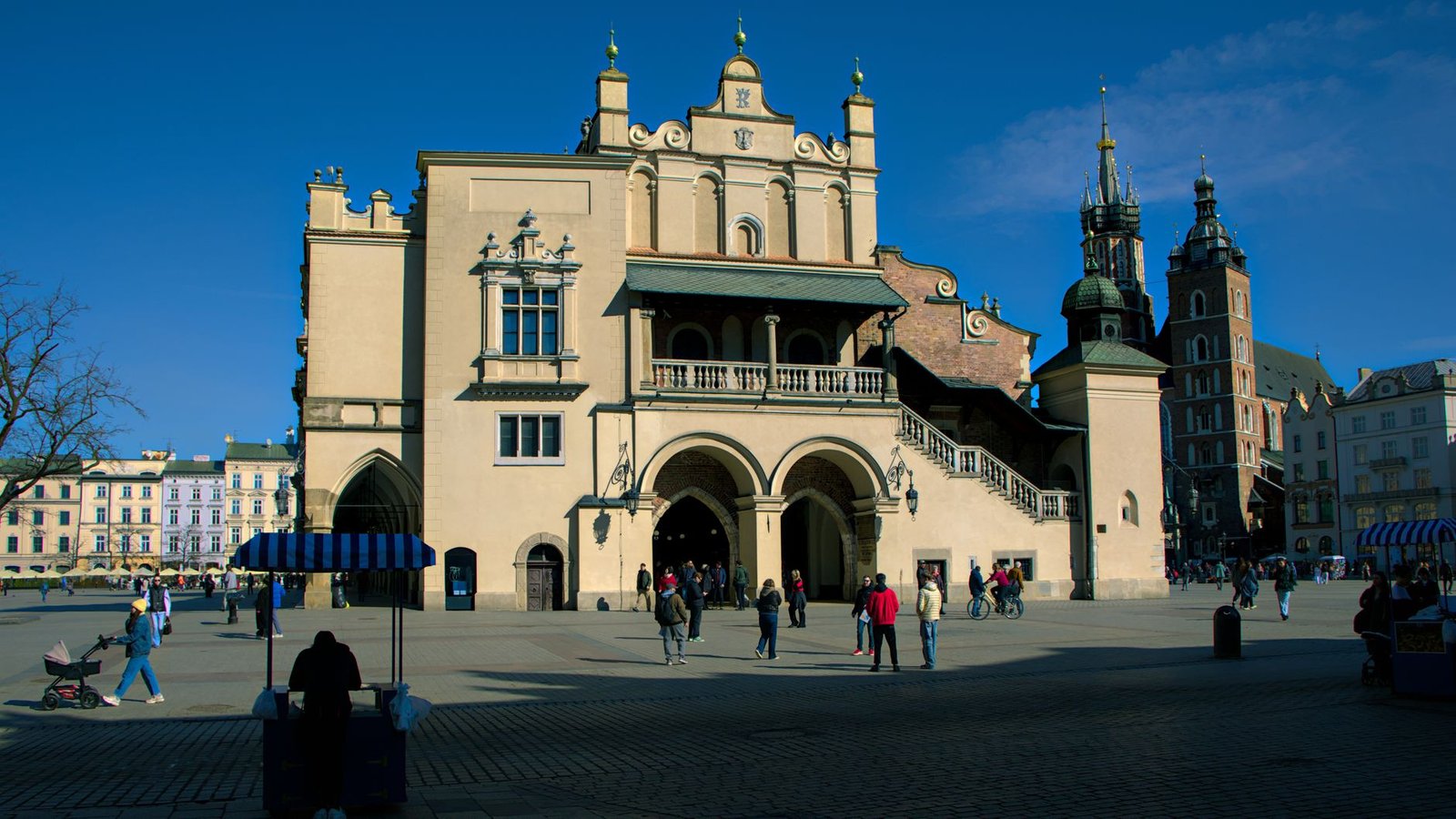
My first impression was an overwhelming sense of stepping back in time. The Rynek Główny, as the Main Market Square is known, is not merely a central plaza; it is the very heart and soul of Krakow, throbbing with life yet steeped in layers of the past. The Cloth Hall, a grand Renaissance structure, stood proud in its centre, its arcades whispering of merchants from bygone eras exchanging silks and spices. It’s a joy to simply sit at one of the many outdoor cafes, sipping strong Polish coffee, and watching the world unfold – horse-drawn carriages clip-clopping past, street artists sketching caricatures, and the perpetual stream of visitors, all drawn to this magnificent tableau. I found these spring days, when the flowers were just beginning to unfurl around Wawel Hill and the outdoor cafes were buzzing but not yet overflowing, to be absolutely perfect for wandering. Others might prefer the mellow hues of autumn, I imagine, to truly soak in the city’s ancient spirit, with its comfortable, cooler air.
A journey along the Royal Route, the historical path kings once took to their coronations, felt like a pilgrimage. It led me past grand townhouses adorned with intricate facades, through St. Florian’s Gate, the last surviving fragment of the city’s medieval fortifications, and finally to the majestic Wawel Hill. This elevated complex, home to the Royal Castle and Cathedral, is where Poland’s monarchs lived, ruled, and were laid to rest. Each chapel within the cathedral holds a piece of history, a testament to the nation’s enduring faith and legacy. It was here, gazing up at the gargoyles and listening to the echoes of countless footsteps, that I truly felt the weight of history. Below the hill, nestled in a cave, is the legendary lair of the Wawel Dragon, Smok Wawelski, a fiery beast whose tale has been passed down through generations. Such stories, woven into the very fabric of the city, are what make Krakow so utterly captivating to a history lover like myself.
Just a short walk from the bustling Main Market Square lies Kazimierz, Krakow’s historic Jewish Quarter. This district tells a story of both profound sorrow and incredible resilience, a vibrant tapestry woven with threads of art, culture, and memory. Once a separate city, Kazimierz became a focal point for Jewish life and culture for centuries before the horrors of World War II. Walking through its narrow, atmospheric streets, past synagogues and old cemeteries, I felt a deep sense of reverence. Today, Kazimierz has re-emerged as a bohemian hub, with its independent galleries, quirky cafes, and lively bars, yet the echoes of its past remain, serving as a poignant reminder of lives lived and lost. It’s a place that demands quiet contemplation, a space where understanding history is not merely academic but deeply felt.
Beyond the immediate charm of Krakow’s centre, the city serves as a gateway to profound historical reflection. Many choose to make the solemn journey to Auschwitz-Birkenau, a stark testament to humanity’s darkest chapter, located about an hour and a half away. While not a place for tourism in the usual sense, it is an essential site for education and remembrance, a necessary pilgrimage to understand the depths of human suffering and the importance of never forgetting. Returning to Krakow’s vibrant streets after such a profound experience offered a strange dichotomy – a reminder of life’s resilience and the enduring human spirit amidst the shadows of history.
As for practicalities for fellow explorers, Krakow is remarkably welcoming. While Poland is part of the European Union, it uses the Polish Złoty (PLN), and I found it to be quite affordable compared to many Western European cities, meaning your travel budget stretches a little further here. While Krakow boasts a decent public transport network of trams and buses, I found the true magic unveiled itself on foot, each turn revealing another layer of history, a charming courtyard, or an unexpected chapel. As with any city, a little common sense regarding your belongings goes a long way, but I always felt safe and at ease wandering its streets, even after dusk. For those considering a visit, do check the latest visa requirements for Poland, as these can vary depending on your nationality.
Krakow is more than just a collection of beautiful buildings and historical sites; it is a living, breathing testament to resilience, beauty, and the enduring power of culture. Every cobblestone, every archway, every chiming bell seems to whisper tales of the past, inviting you to listen, to learn, and to become a part of its ongoing story.
Plan your trip to this destination with TourZen.in – real itineraries, trusted local experts, one simple conversation.
Image by: Piotr Kalinowski\nhttps://www.pexels.com/@hvitkerist