Inside Guimaraes: A Hidden Gem Worth the Detour
The moment my foot found purchase on the ancient cobbles of Guimaraes, a palpable weight settled in the air, a sense of deep time that hummed beneath the modern bustle. There are cities that simply exist, and then there are places like this, where history isn’t just etched into stone but woven into the very fabric of the breeze. They call Guimaraes the birthplace of Portugal, and it’s a grand claim, one that might sound like mere civic pride elsewhere. But here, in this enchanting corner of the Minho region, it feels like an undeniable truth, a foundational narrative that shapes every sun-dappled square and every whispering alley.
To say Guimaraes is where Portugal began is to understand that a nation, much like a person, has a genesis. This isn’t just about a treaty or a declaration; it’s about the first seeds of identity, the forging of a collective spirit. It was within these very walls, crowned by a formidable 10th-century castle, that Afonso Henriques, the first King of Portugal, was born and baptized. From this stronghold, he began the arduous journey of carving out a kingdom from the territories of the Kingdom of León, fighting pivotal battles that would eventually define the independent nation we know today. To walk these streets, then, is to step onto hallowed ground, to feel the echoes of a nascent sovereignty that makes every stone here resonate with a profound significance.
First Impressions: A Tapestry of Time
My first impressions were a rich tapestry of ochre stone, vibrant bougainvillea spilling over wrought-iron balconies, and the distant clang of a bell. The historical centre, a UNESCO World Heritage site, truly feels like a living museum, yet it hums with everyday life. Children chase pigeons in Largo da Oliveira, their laughter ringing against centuries-old facades, while elderly men gather for coffee, their animated Portuguese blending with the scent of freshly baked bread. It’s a place that wears its antiquity not as a dusty relic, but as a comfortable, well-loved garment.
There’s a gentle rhythm here, a slowness that invites lingering. The narrow lanes, twisting and turning, seem deliberately designed to encourage wandering, each twist revealing another charming square, a hidden fountain, or a glimpse of the castle high above. I found myself pausing often, just to absorb the atmosphere – the way the light catches the intricate details of a Manueline window, or the quiet murmur of water from a moss-covered fountain. It’s an immersive experience, a gentle coaxing into the past.
Getting Oriented: From Castle to Convent
Getting oriented in Guimaraes is less about following a rigid map and more about allowing the town to guide you. All roads, it seems, eventually lead either up to the formidable Castle of Guimaraes and the Palace of the Dukes of Braganza, or down into the charming squares like Largo da Oliveira and Praça de Santiago.
The castle stands as a stern, magnificent sentinel, its battlements scarred by centuries, its keep a testament to the iron will of those who defended this fledgling nation. Exploring its interior, particularly the Tower of Homage, one can almost hear the clamour of early medieval life, the whispers of strategists, and the cries of the first Portuguese king. Just adjacent, the imposing Palace of the Dukes of Braganza, with its distinctively styled chimneys, offers a window into the opulence and power of later Portuguese nobility, a fascinating contrast to the castle’s more austere beginnings.
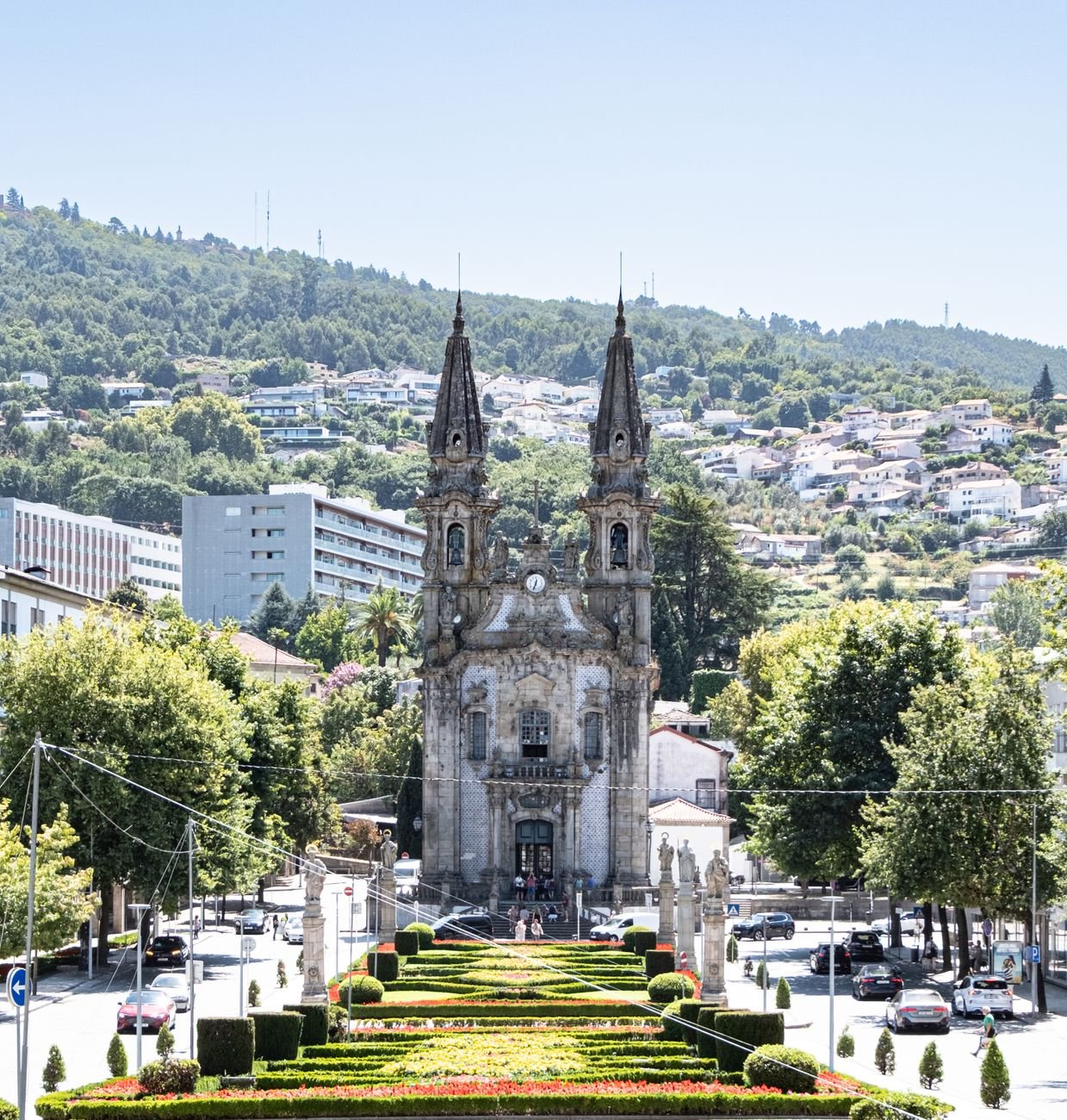
Descending from these heights, the town unfurls into a network of pedestrian streets. Largo da Oliveira, dominated by the ancient Olive Tree and the exquisite Igreja de Nossa Senhora da Oliveira, feels like the town’s beating heart. Legend has it that a miraculous cross appeared here in the 7th century, drawing pilgrims and cementing the area’s spiritual importance long before it became a political powerhouse. It’s a place to sit, to sip a coffee, and simply watch the world go by, imagining the countless generations who have done the same.
A Standout Moment: The Whispers of a Nation
My standout moment in Guimaraes wasn’t a grand revelation, but a quiet, deeply personal connection. It happened late one afternoon, after the main crowds had thinned, as I sat on a low stone wall overlooking the medieval bridge near the São Miguel do Castelo Church – the very church where Afonso Henriques is said to have been baptized. The sun was dipping, casting long, golden shadows across the ancient stones, and a profound silence had fallen, broken only by the chirping of crickets.
I found myself tracing the patterns in the moss growing on the stones, thinking about how many hands had touched these same surfaces, how many footsteps had worn them smooth over a thousand years. It wasn’t just about a king or a battle; it was about the continuous human story, the enduring spirit that had transformed a small countship into a vibrant nation. In that moment, Guimaraes wasn’t just a collection of old buildings; it was a living narrative, a tangible link to the very idea of Portugal. It was a feeling of rootedness, of understanding a land through its oldest stories, that truly made the detour worthwhile.
Practical Grounding
Guimaraes is a destination best savoured slowly, and thankfully, it’s quite accessible. The most pleasant time to visit is typically between April and October, when the weather is warm and inviting, perfect for strolling through its historical center and exploring its outdoor sites. Being part of the European Union, general Schengen visa rules apply for international visitors, which are widely known and easily researched. From a safety perspective, Guimaraes is a very welcoming and secure town, with the usual common-sense precautions for any travel sufficing.
As for costs, while Portugal generally offers good value for travelers, Guimaraes maintains a charming authenticity that doesn’t feel overly tourist-priced. You’ll find a range of accommodation from boutique guesthouses in historic buildings to more modern options, and dining experiences that range from simple, delicious local taverns to more refined restaurants, all generally offering excellent quality for the price.
Summary
Guimaraes is far more than just another pretty medieval town; it is, quite literally, the cradle of a nation. For anyone with a love for history, a yearning for authentic culture, and a desire to connect with the deep roots of European identity, this charming Portuguese gem offers an experience that is both profoundly enriching and delightfully unhurried. It’s a place that whispers stories from a thousand years ago, inviting you to listen, to learn, and to truly feel the spirit of Portugal.
Plan your trip with TourZen.in – real itineraries, trusted local experts, one simple conversation.
Image by: George Piskov\nhttps://www.pexels.com/@george-piskov-289673052