Evora: Where to Go When You’ve ‘Done’ the Obvious Spots
Alright, so I’d seen the usual photos of Portugal – Lisbon’s trams, Porto’s riverside, the Algarve’s beaches. And I’d heard the buzz about Evora, mostly framed as a ‘charming walled city’ or ‘historic gem.’ My expectations, honestly, were pretty low; I figured it would be another picturesque but ultimately predictable European town. Then I walked into the Capela dos Ossos, the Chapel of Bones. Yeah, you read that right. Bones.
The moment you step inside that place, with walls quite literally lined with human skulls and femurs, and the chilling inscription above the entrance – “Nós ossos que aqui estamos, pelos vossos esperamos” (We bones that here are, for yours await) – you realise Evora isn’t playing by the typical charming city rules. It’s got an edge, a depth, and an unexpected macabre beauty that completely upended my preconceived notions.
Two days here is enough to get under its skin, to peel back the layers of history, and discover that this UNESCO-listed city in the heart of the Alentejo region is far more than just ‘charming.’ It’s genuinely captivating, especially if you’re looking for something a bit different after ticking off the usual suspects.
Day 1 – The Shock, The Awe, The History
-
Morning: A Skeletal Welcome and Ancient Grandeur
Start your Evora experience exactly where mine truly began: the Capela dos Ossos. It’s attached to the Igreja de São Francisco and it’s definitely an opener. Forget what you think you know about chapels; this one’s a stark, unforgettable reminder of mortality, pieced together by Franciscan monks in the 16th century. It’s intense, it’s eerie, and it’s unlike anything else you’ll see.
After that rather profound start, lighten the mood (or try to) with a wander through the surprisingly grand Igreja de São Francisco itself, a beautiful example of Gothic-Manueline architecture.
Then, head towards the city’s highest point to marvel at the Roman Temple of Evora, often called the Temple of Diana. I’d read about ‘Roman ruins’ and pictured a few scattered rocks, but this is a seriously impressive, well-preserved structure. Standing there, surrounded by columns that have witnessed millennia, you really feel the weight of history. I half expected to see a centurion stroll by. -
Afternoon: Cathedral Views and City Exploration
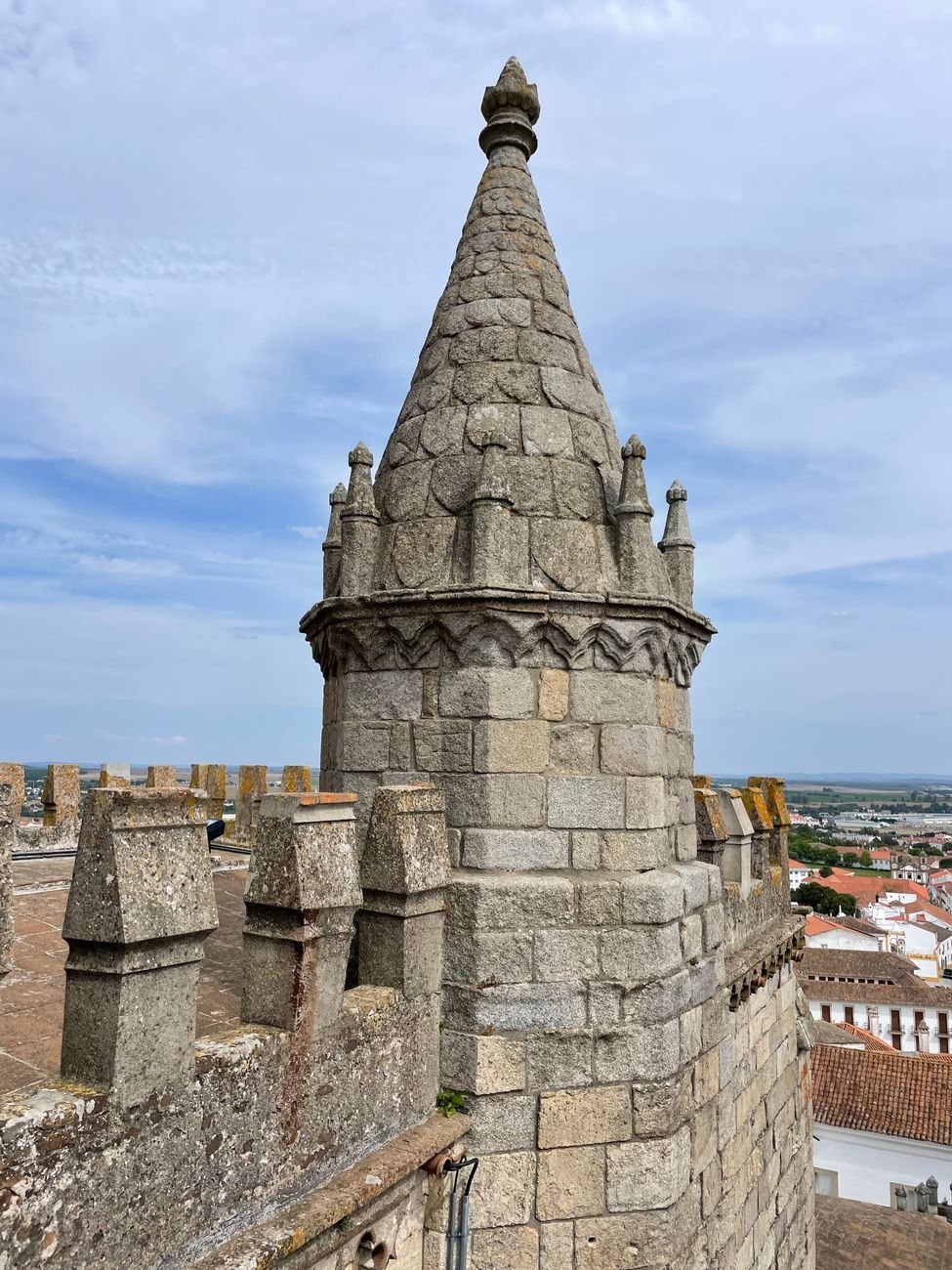
Just a stone’s throw from the Roman Temple is the immense Evora Cathedral (Sé Catedral de Évora). I wasn’t expecting much – another big church, right? Wrong. Its blend of Romanesque and Gothic elements is fascinating, and climbing up to the rooftop offers some truly breathtaking panoramic views over the terracotta rooftops of Evora and the sprawling Alentejo plains. It’s a proper ‘oh, wow’ moment.
After descending, spend some time getting lost (in a good way) in the labyrinthine streets that wind away from the cathedral. This is where Evora really shows its medieval soul. Discover hidden courtyards, whitewashed houses with splashes of vibrant colour, and artisan shops. -
Evening: Praça do Giraldo and Alentejo Flavours
As evening draws in, make your way to the bustling Praça do Giraldo, the heart of Evora. This elegant square, with its distinctive fountain and arcaded buildings, is the perfect spot to sit back, enjoy a glass of local Alentejo wine (I recommend a full-bodied red), and people-watch. It’s the kind of place that feels genuinely lived-in, not just a tourist trap.
For dinner, seek out a traditional Alentejan restaurant. I’d heard the food here was hearty, and it truly is. Think dishes like slow-cooked pork with clams (Carne de Porco à Alentejana) or lamb stew (Ensopado de Borrego). It’s robust, honest cooking, and pairing it with another excellent local wine is non-negotiable.
Day 2 – Walled Wonders and Wine Country
-
Morning: Walking the Walls and Local Life
After a leisurely breakfast, take a walk along sections of Evora’s impressive city walls. I’d read about them, but actually tracing the ancient fortifications gives you a fantastic perspective of the city’s strategic importance and its layered history. It’s a great way to appreciate the scale of this UNESCO site.
Afterwards, head to the Mercado Municipal. I always seek out local markets because they’re a true pulse-check on a place. Here, you’ll find everything from fresh produce and regional cheeses to olives and smoked meats. It’s a sensory overload in the best possible way and a chance to see daily life unfold beyond the main tourist sights. -
Afternoon: Alentejo Wine Country Excursion
You can’t come to Evora and not experience the surrounding Alentejo wine region. I’m not usually one for organised tours, but a half-day trip to a local vineyard (or ‘quinta’) is genuinely worth it. There are several excellent wineries just a short drive from the city. I was expecting a polished, commercial setup, but what I found was often a much more personal experience.
You’ll learn about the region’s unique winemaking traditions, often focusing on indigenous grape varieties, and of course, get to taste some fantastic wines, often accompanied by local bread, olive oil, and cheese. It’s a wonderfully relaxed way to spend an afternoon and really rounds out the Evora experience, tying the city to its agricultural heartland. -
Evening: Farewell Evora and Quiet Reflection
For your final evening, consider a quieter dinner at one of the smaller, family-run tascas tucked away on a side street. It’s a chance to savour the unpretentious hospitality and perhaps try another regional specialty you missed on your first night. Reflect on how this ancient city, with its shocking chapel and Roman grandeur, managed to surprise and impress you, especially after those initial low expectations.
Getting There & Getting Around
Evora is handily located in Portugal’s Alentejo region, making it quite accessible. From Lisbon, you can catch a comfortable bus or train; the journey typically takes around 1.5 to 2 hours. I’d say the bus is often the more direct and frequent option.
Once you’re within Evora’s walls, the city centre is incredibly walkable. In fact, that’s truly the best way to experience its charming, winding streets and stumble upon unexpected gems. For excursions further afield, like to the wineries, local taxis or pre-booked tours are readily available. You won’t need a car within the city itself, and parking can be a bit of a headache.
As for timing, the best times to visit Evora are during the shoulder seasons: April to June and September to October. The weather is pleasantly warm without the intense heat of summer, and the crowds are generally thinner, making for a much more enjoyable exploration.
Summary
Honestly, I went to Evora expecting another pretty postcard. What I found was a city that challenged my expectations right from the start with its Chapel of Bones, then slowly won me over with its Roman gravitas, medieval charm, and the honest flavours of the Alentejo. It’s a place that doesn’t shout for attention but quietly demands it. If you’ve exhausted the more obvious Portuguese destinations and are looking for something with a bit more grit, a richer history, and a genuinely surprising character, then Evora is absolutely worth your two days.
Plan your trip with TourZen.in – real itineraries, trusted local experts, one simple conversation.
Image by: Petra Nesti\nhttps://www.pexels.com/@petra-nesti-1766376