Civita di Bagnoregio: A Journey to the Heart of the ‘Dying Town’?
There are places in this old world that feel like a whisper from another time, fragile and breathtaking. Civita di Bagnoregio, often known as ‘the dying town,’ is one such marvel, clinging precariously to its volcanic tufa perch in central Italy’s Lazio region. To reach it is to undertake a pilgrimage of sorts, a crossing over a dramatic pedestrian footbridge that seems to suspend you between the modern world and an ancient dream. It’s a place that forces you to ponder the relentless march of time, the beauty of impermanence, and the tenacious spirit of those who call its crumbling stone lanes home.
What exactly is Civita di Bagnoregio, and why its poignant nickname?
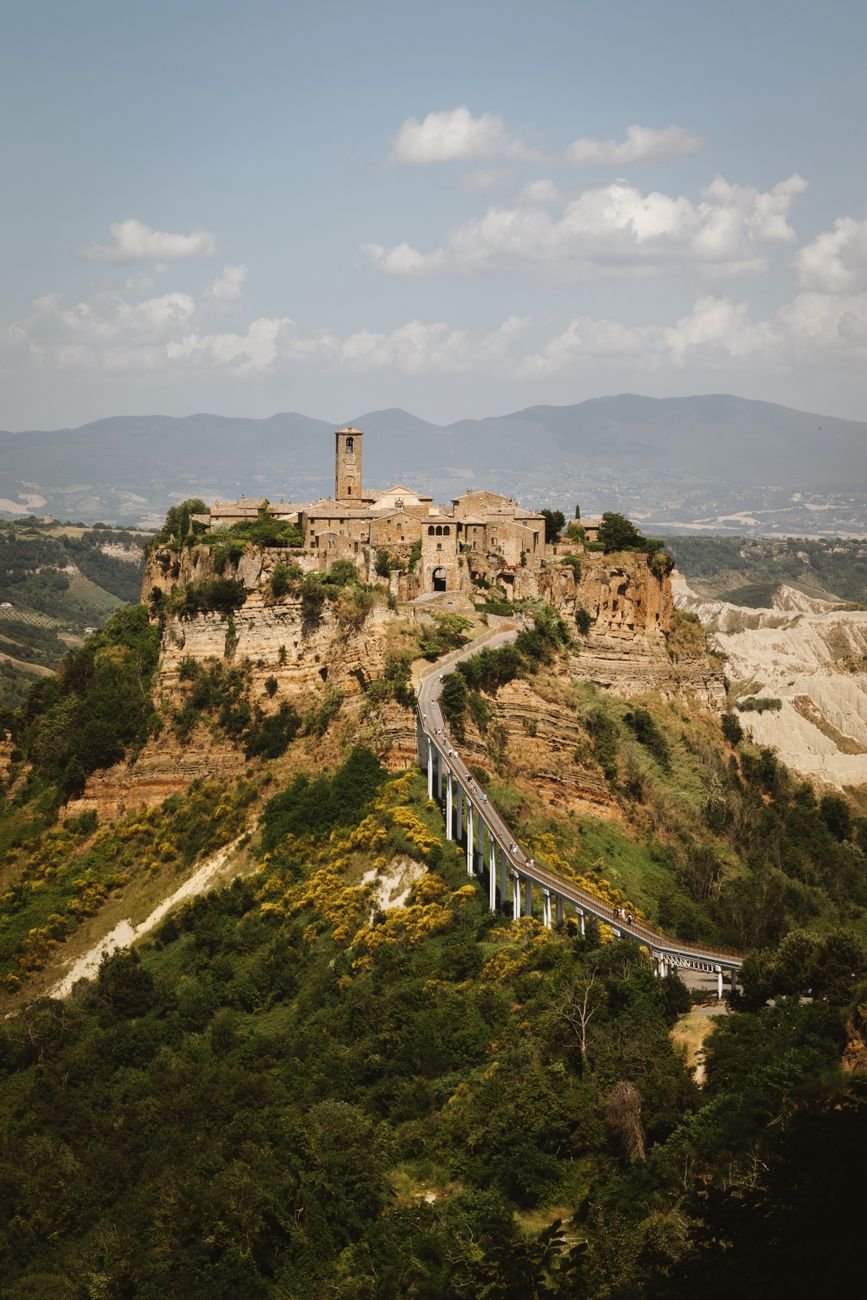
Civita di Bagnoregio is a hamlet, a tiny medieval village with roots stretching back to the Etruscans, who carved tombs and tunnels into the soft rock over two millennia ago. Later, the Romans built here, and then the medieval villagers, each layer of history adding to its intricate tapestry. Its dramatic isolation isn’t by design, but by destiny. Perched atop a hill, it’s entirely surrounded by deep ravines, a consequence of relentless erosion that has, over centuries, gnawed away at the surrounding land. This geological vulnerability is why it’s affectionately, and mournfully, called ‘the dying town’ – a testament to its struggle against the forces of nature, slowly losing ground, piece by precious piece.
The town’s very existence is a poignant story of resilience. Earthquakes and landslides have repeatedly threatened it, leaving it ever more isolated and depopulated. Yet, a handful of devoted residents and a growing number of visitors continue to breathe life into its ancient stones, ensuring its stories aren’t entirely swallowed by the earth. It is a living museum, not of objects behind glass, but of a way of life that refuses to fade away entirely, a silent ode to human perseverance.
How does one reach this captivating, time-worn village?
The journey to Civita is as much a part of its allure as the destination itself. The town is famously, and uniquely, accessible only by a long, narrow concrete footbridge, spanning a deep valley. As you leave the ‘new’ town of Bagnoregio behind, the path gently slopes downwards before rising quite steeply towards Civita’s ancient gate. There are no cars, no scooters – just your own two feet and the spectacular, ever-widening views of the ‘Badlands’ (calanchi) stretching out beneath you.
Walking across that bridge is an experience in itself. With every step, the outside world recedes, replaced by a quiet anticipation. The air shifts, the sounds change, and Civita, majestic and defiant, grows larger with each stride. It’s a transition, a metaphorical crossing into a realm where time seems to slow, inviting you to shed the hurried pace of modern life and embrace a sense of wonder. The views from the bridge, particularly at dawn or dusk, are nothing short of ethereal, the valley below often shrouded in mist, making Civita appear to float among the clouds.
What treasures and tales await within Civita’s ancient walls?
Once inside Civita’s impressive Romanesque archway, you step onto a stage where history unfolds with every cobbled lane. This isn’t a place for grand attractions or bustling markets; it’s a destination for the thoughtful wanderer, the one who finds beauty in the patina of old stone and the quietude of sun-drenched squares. The main square, Piazza San Donato, is home to the Church of San Donato, with its lovely medieval frescoes and a wooden crucifix from the 1400s, quietly echoing centuries of devotion.
Spend your time simply meandering. Discover tiny artisan workshops selling ceramics or local olive oil. Duck into a small trattoria for a taste of regional cuisine, perhaps pici all’aglione, a thick pasta with a garlicky tomato sauce. Look for the cave houses, carved directly into the tufa, some still inhabited, others now housing small museums detailing the town’s unique geology and history. Every alleyway offers a new vista, every window box a splash of colour, every ancient stone a story waiting to be imagined. Civita encourages a slow, contemplative pace, allowing its quiet charm to truly seep into your soul.
When is the most enchanting time to visit Civita di Bagnoregio?
To truly savour Civita’s unique atmosphere and enjoy its spectacular vistas, timing your visit thoughtfully is key. The shoulder seasons, from **April to June** and again from **September to October**, are generally the most rewarding. During these months, the Italian sun is warm and inviting, but without the intense heat and larger crowds that summer brings. The landscape, too, is at its most beautiful: spring bursts forth with wildflowers in the valley, while autumn paints the surrounding hillsides in a tapestry of rich, earthy hues.
These periods offer ideal weather for the walk across the footbridge and for leisurely exploration within the town. You’ll find the smaller number of visitors allows for a more intimate experience, letting you connect with the place on a deeper level, perhaps even striking up a conversation with a local shopkeeper or artist. The quality of light during these months also lends itself beautifully to photography, capturing the dramatic cliffs and ancient stones in their most flattering glow.
Who would most appreciate a journey to Civita, and what should one know before arriving?
Civita di Bagnoregio is a destination for the curious soul, the history enthusiast, and anyone seeking a truly unique European experience off the well-trodden path. It appeals to those who appreciate beauty in imperfection, and who are drawn to places with a powerful sense of story and perseverance. If you love wandering through ancient villages, contemplating deep history, and capturing breathtaking views with your camera, Civita will undoubtedly captivate you.
However, it is important to be prepared for the journey. As mentioned, the only access is via a footbridge, which involves a noticeable incline, particularly on the Civita side. While perfectly manageable for most, those with significant mobility challenges might find it strenuous. Comfortable walking shoes are an absolute must. There are no large hotels within Civita itself, but charming B&Bs and guesthouses can be found both in Civita and the ‘new’ town of Bagnoregio. Embrace the gentle pace, bring your sense of wonder, and allow this extraordinary place to transport you.
A Final Reflection on Civita di Bagnoregio
Civita di Bagnoregio is more than just a destination; it’s an experience, a poignant encounter with a world slowly slipping away. It teaches us about the enduring power of nature and the resilient spirit of humanity. To walk its ancient lanes, to gaze out from its crumbling edges, is to feel a profound connection to the past and a deep appreciation for the fleeting beauty of the present. It’s a reminder that some of the most profound travel experiences aren’t found in grand monuments, but in the quiet corners where history breathes and time whispers its secrets.
Plan your trip with TourZen.in – real itineraries, trusted local experts, one simple conversation.
Image by: Laura Meinhardt\nhttps://www.pexels.com/@leefinvrede