Sighisoara: What Quiet Wonders Unfurl Within Its Ancient Walls?
There are places where history isn’t just displayed in museums; it breathes, it walks alongside you, a gentle whisper in the wind that rustles through medieval turrets. Sighisoara, nestled deep in the heart of Transylvania, is one such rarity. It’s a citadel not merely preserved, but vibrantly alive, a living monument to centuries past. Stepping through its gate is like turning the page of an ancient illuminated manuscript, inviting you to discover a story far richer than any single legend.
Is Sighisoara truly the land of Dracula, and what else should one know of its past?
Indeed, Sighisoara holds a compelling, if somewhat notorious, claim to fame as the birthplace of Vlad Tepes, better known as Vlad the Impaler – the historical figure whose name became entwined with the legend of Dracula. His childhood home, a sturdy ochre building, still stands within the citadel walls, a tangible link to a character who has haunted imaginations for centuries. While it’s a fascinating detail, to truly grasp Sighisoara is to look beyond this singular shadow.
This citadel, a UNESCO World Heritage site, is one of the last still-inhabited medieval fortresses in Europe, a testament to its enduring spirit. Founded by Saxon craftsmen and merchants in the 12th century, Sighisoara flourished as a vital trading hub, its guilds building the very towers that still stand sentinel today. Each cobblestone, each worn archway, holds the echoes of generations who lived, loved, and labored here. It’s a place where you can almost feel the presence of those who came before, a living tapestry woven from daily life and grand historical moments.
Beyond the legends, what cultural and historical treasures await within the citadel?
Sighisoara truly shines in its vibrant medieval character. Your journey will inevitably begin at the iconic Clock Tower, a monumental guardian crowned with a colourful, intricate roof. Ascend its creaking wooden stairs to gain a panoramic view that sweeps across the citadel’s terracotta rooftops and the verdant Transylvanian hills beyond – a view that has changed remarkably little over the centuries. Inside, a museum offers glimpses into the town’s rich artisanal history.
From the Clock Tower, the Scholars’ Stairway beckons, a covered wooden staircase built in 1662 to protect students making their way to the school on the hill during harsh winters. It’s a climb that feels like a quiet pilgrimage, leading to the Church on the Hill, a Gothic marvel adorned with frescoes that whisper tales of faith and artistry. Below, the Saxon Cemetery provides a poignant, peaceful space for reflection. Wander the narrow, winding streets, and you’ll stumble upon the Collegiate Church (formerly the Dominican Monastery Church), or perhaps one of the nine remaining guild towers, each with its own distinctive shape and story – the Tinsmiths’ Tower, the Bootmakers’ Tower, the Furriers’ Tower – silent witnesses to a bygone era of craftsmanship and community.
What is it like to experience the daily rhythm of life in a living medieval town?
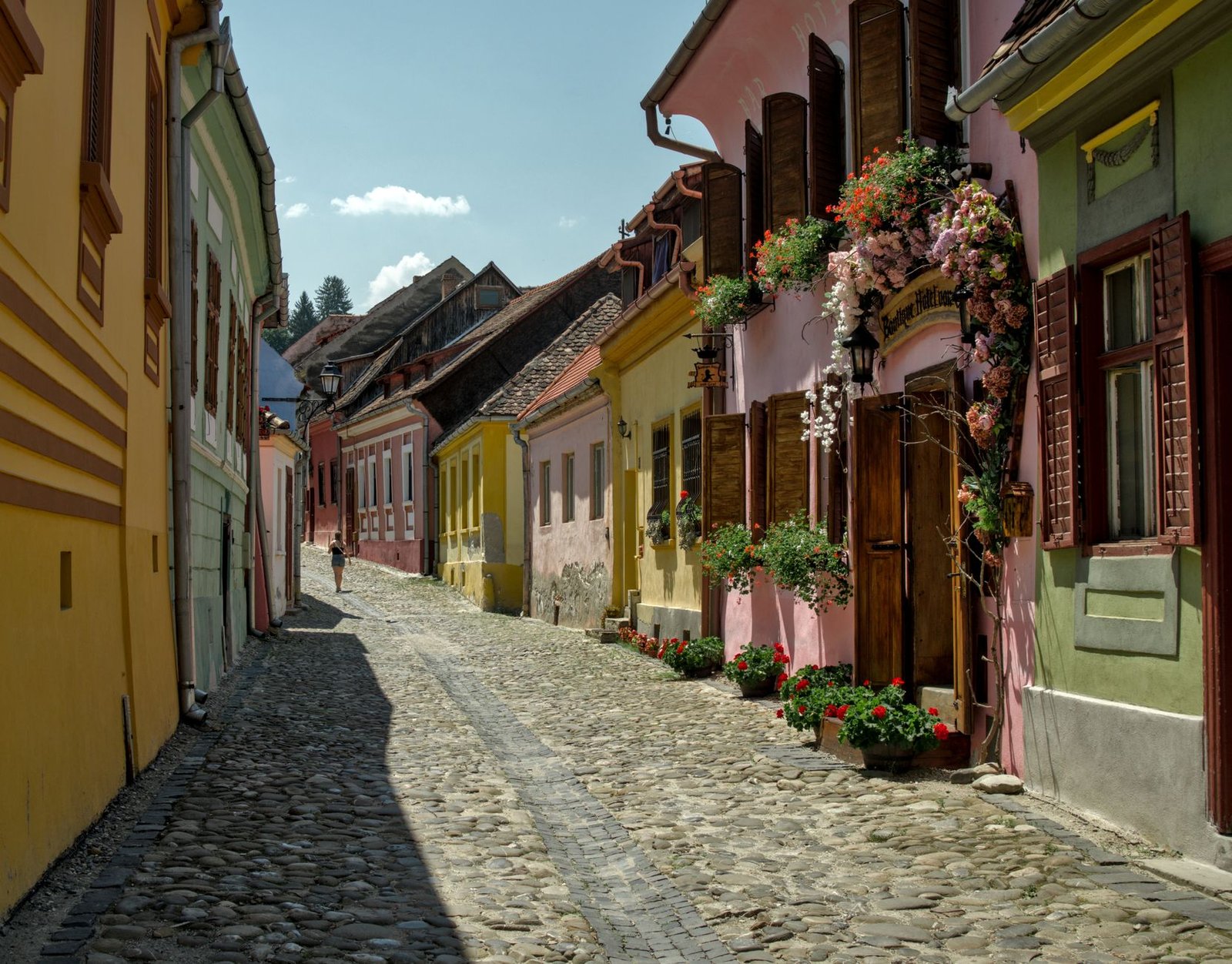
This is where Sighisoara truly captivates the soul. Unlike many perfectly preserved but often sterile historical sites, Sighisoara is a place where life continues to unfold within its ancient embrace. You’ll see laundry strung between centuries-old buildings, children playing in cobbled squares, and neighbours exchanging greetings across flower-laden windowsills. Artisans still ply their trades, though perhaps crafting souvenirs rather than armor, and the aroma of coffee often mingles with the scent of damp stone after a summer shower.
There’s a gentle hum to the daily life here, a slow pace that encourages you to linger. Spend an afternoon simply sitting in the main square, Piața Cetății, sipping a strong Romanian coffee, and observing the quiet ballet of everyday existence. You might see a wedding party emerge from the Church on the Hill, hear the strains of traditional music from a tucked-away restaurant, or watch as the golden light of sunset bathes the ancient walls in a soft, ethereal glow. It’s this seamless blend of history and present-day reality that gives Sighisoara its truly unique and unforgettable character.
What culinary delights should one seek out in Sighisoara?
Transylvanian cuisine is hearty, flavourful, and deeply rooted in the region’s agricultural heritage, and Sighisoara offers ample opportunity to savor its authentic tastes. Look for traditional Romanian dishes that often feature pork, cabbage, and polenta (mămăligă). A must-try is sarmale, cabbage rolls generously filled with minced meat and rice, simmered in a rich sauce and often served with a dollop of sour cream.
Another staple is mici (pronounced ‘mee-chee’), grilled skinless sausages, bursting with flavour and perfect with mustard and a cold beer. For something comforting, try a bowl of ciorbă, a sour soup that comes in many delicious varieties, often made with vegetables and meat, and sometimes enriched with sour cream or lemon. And don’t forget to sample local wines or a shot of palincă, a potent fruit brandy, usually plum, if you’re feeling adventurous. Many restaurants within the citadel offer charming settings, from rustic taverns to eateries with scenic terraces, providing the perfect backdrop for your culinary exploration.
When is the best time to visit Sighisoara, and what practical advice should I keep in mind?
The most delightful time to experience Sighisoara is between May and September. During these months, the weather is pleasantly warm, ideal for exploring the citadel’s winding streets on foot, and the vibrant colours of summer bring an extra charm to the town. Many outdoor cafes and restaurants are in full swing, and cultural events sometimes enliven the squares.
Sighisoara is a remarkably safe destination, with a friendly and welcoming atmosphere. While Romanian is the official language, you’ll find that English is often spoken in tourist areas, hotels, and restaurants. The town is quite walkable, especially within the citadel walls, though be prepared for cobblestones and some inclines. For those arriving from other parts of Romania, Sighisoara is well-connected by train and bus, making it an accessible and rewarding stop on any Transylvanian itinerary. As with any historical site, comfortable walking shoes are an absolute must to fully enjoy your explorations!
Sighisoara: A Timeless Invitation
Sighisoara is more than just a pin on a map; it’s an invitation to step back in time, to walk in the footsteps of merchants, scholars, and rulers, and to witness a medieval world that has gracefully adapted to the present. It offers a unique opportunity to connect with history not as a distant echo, but as a living, breathing entity. For those who yearn for authenticity, for the quiet thrill of discovery in a place untouched by the rush of the modern world, Sighisoara offers an unforgettable journey into the soul of Transylvania. It truly is a destination that rewards the curious traveler with a sense of wonder and a trove of cherished memories.
Plan your trip with TourZen.in – real itineraries, trusted local experts, one simple conversation.
Image by: ArWeltAtty Attila\nhttps://www.pexels.com/@arweltatty