Inside Hahoe Village Andong: A Hidden Gem Worth the Detour
Alright, listen up. You’ve probably seen a million “traditional villages” pop up in your travel feeds – beautiful, yes, but often feeling more like an open-air museum than an actual, living place. Well, let me tell you, Hahoe Village in Andong, South Korea, is cut from a different cloth entirely. This isn’t just a collection of old buildings; it’s a UNESCO-listed spot where the descendants of the Pungsan Ryu clan have lived for centuries, and guess what? They’re still living there, right now. You’ll see laundry hanging, grandmas tending gardens, and the scent of actual home cooking wafting from these ancient hanoks.
Two days here? Absolutely perfect. It’s enough time to truly slow down, soak in the quiet rhythms of village life, and appreciate the fact that you’re walking through living history, not just a set piece. It’s a proper detour from the usual Seoul-Busan circuit, but trust me, it’s worth every minute of travel. This is where you actually feel like you’ve stepped back in time, seeing traditions practiced, not just preserved behind glass.
Day 1 – Stepping Into a Living Postcard
-
Morning: Arrival & First Glimpse of History
Get yourself to Andong first thing, then grab a local bus or taxi straight to Hahoe. As you approach, you’ll feel the modern world start to peel away. Once you’re in, ditch the bags and just… walk. Forget your map for a bit. The beauty of Hahoe is in its organic layout, nestled in that perfect bend of the Nakdong River. The village isn’t huge, but every alleyway, every stone wall, every tiled roof holds stories. You’ll notice the incredible preservation, sure, but what really hits you is the sound – or lack thereof. It’s wonderfully quiet, save for the occasional clatter from a working house or kids’ laughter.
Find a little local cafe for a coffee – a simple, no-frills place. It’s not about fancy lattes here; it’s about watching the world go by. Wander past the traditional homes, some grander than others, all contributing to the village’s unique character. You’ll see doors slightly ajar, maybe even someone inside going about their day. It’s not an exhibit; it’s life.
-
Afternoon: Lunch & River Views
By now, your stomach will be rumbling. Andong is famous for Andong Jjimdak, a spicy braised chicken dish. You absolutely have to try it. There are several spots in and around the village. It’s hearty, flavorful, and exactly what you need after all that walking. After lunch, make your way towards the river. The Nakdong River literally cradles the village, hence “Hahoe,” meaning “village encircled by water.” Take your time along the riverbanks. The views are serene, and it’s a great spot to just sit and reflect, watching the water flow past.
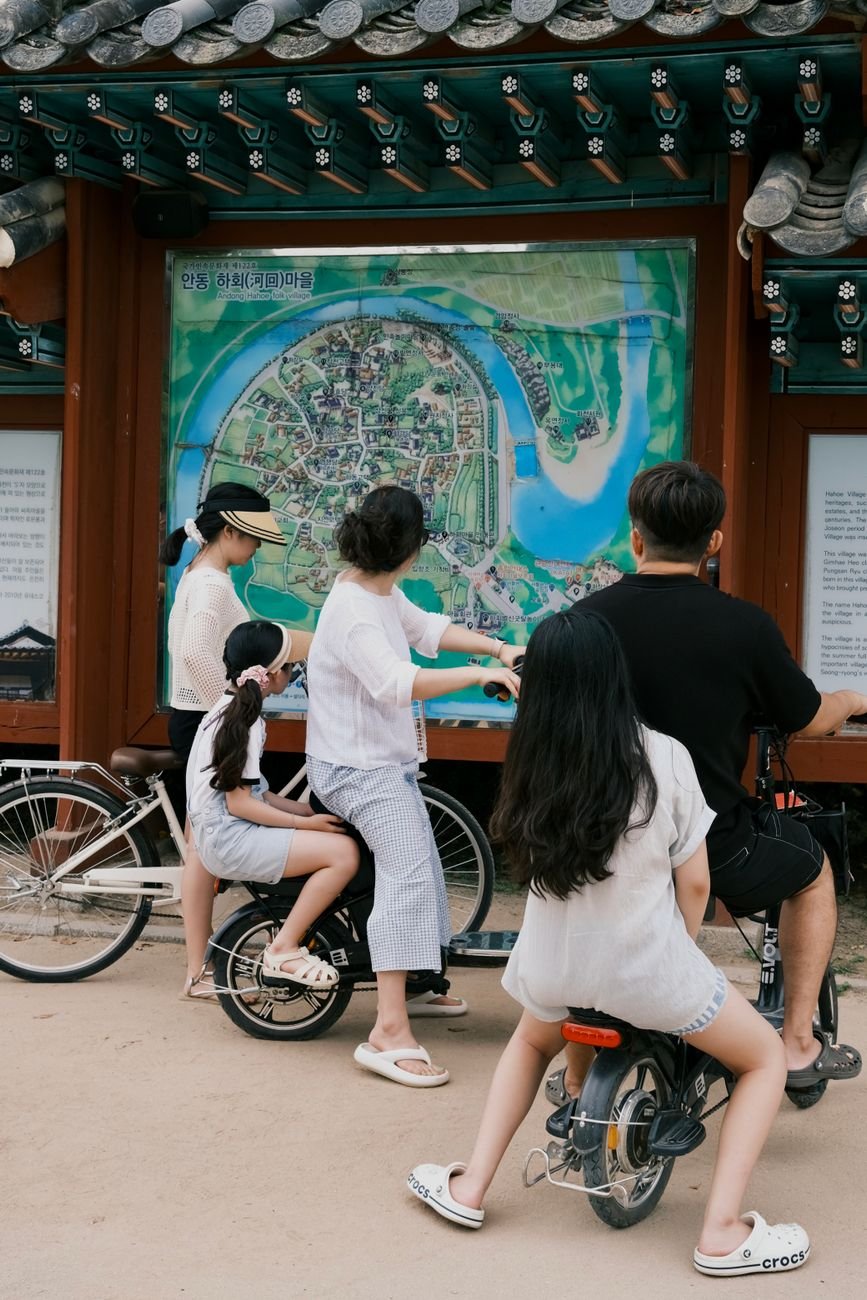
If you’re feeling energetic, you can rent a bicycle and explore the perimeter a bit. It’s a great way to cover ground and get different perspectives of the village against its natural backdrop without breaking the bank.
-
Evening: Traditional Performances & Local Flavors
The Hahoe Mask Dance Drama (Byeolsingut Talnori) is a must-see. Check the schedule, as it’s usually performed on specific days. This isn’t just a performance; it’s an ancient shamanistic ritual that’s been passed down for generations. The masks are iconic, and the stories told are both humorous and poignant, often satirizing the elite and celebrating common folk. It’s raw, energetic, and a real peek into Korean folk culture.
For dinner, seek out a simple restaurant offering traditional Korean fare – perhaps some bibimbap or doenjang jjigae. Don’t expect Michelin stars; expect honest, comforting food, often prepared with local ingredients. The best part is just soaking in the atmosphere, knowing you’re in a place where people still keep these traditions alive.
Day 2 – Perspectives & Clan Stories
-
Morning: Panoramic Views & Quiet Exploration
Wake up early and make your way across the river to Buyongdae Cliff. There’s a small ferry that crosses, or if it’s not running, you can walk or take a taxi around. The hike up the cliff is not strenuous and offers the most breathtaking panoramic views of Hahoe Village. From up high, you truly grasp why this location was chosen: the way the river wraps around it like a giant yin-yang symbol, the meticulously arranged hanoks, the surrounding rice paddies. It’s a view that’ll stick with you.
After descending, spend some time exploring the Yangjindang (North Village House) and Chunghyodang (South Village House), which are representative of the grandest homes of the Pungsan Ryu clan. While some areas are public, remember these are still private residences for many parts, so be respectful. You’ll often see signs indicating which areas are open for viewing. It’s amazing to think of the generations who have lived within these very walls.
-
Afternoon: Local Crafts & Tea Ceremony
Dive a little deeper into the local culture. Hahoe is known for its traditional crafts, especially related to the masks. Look for workshops where you can see artisans at work, or even try your hand at some simple crafts. It’s a nice souvenir that actually means something, rather than just another mass-produced trinket. You might also find a traditional tea house offering Korean ceremonial tea. It’s a peaceful experience, a moment to slow down and savor the tranquility. This isn’t just about drinking tea; it’s about the ritual, the quiet, and connecting with a deeper part of Korean culture.
Take a final stroll through the village, perhaps revisiting a spot that caught your eye yesterday. Notice the details you might have missed before – the carvings on a gate, the intricate patterns on a roof tile, the subtle sounds of life happening around you. It’s the kind of place where you uncover new layers with each pass.
-
Evening: Departure or Extended Stay
Depending on your onward journey, you can head back to Andong city in the late afternoon or early evening. If you really fell for the charm (and many do!), consider spending another night in a traditional hanok guesthouse within the village itself. It’s a unique experience to sleep on a heated ondol floor and wake up to the quiet sounds of Hahoe. It might be a slight splurge compared to a hostel, but for the experience, it’s absolutely worth it. It’s a different kind of quiet than any city hotel can offer.
Getting There & Getting Around
Getting to Andong is straightforward. From Seoul, you can take a KTX train to Andong Station (about 2-2.5 hours) or a bus from Dong Seoul Bus Terminal (about 3 hours, often cheaper). From Busan, it’s also about 2.5-3 hours by bus. Once you’re in Andong city, local buses (like bus #246) run regularly to Hahoe Folk Village, taking about 40-50 minutes. Taxis are also an option, quicker but obviously more expensive.
Once you’re at Hahoe, the best way to get around is on foot. The village is compact and designed for walking. Renting a bicycle is an option for exploring the perimeter or getting to Buyongdae Cliff if you prefer not to take the ferry or walk the longer route. There are usually shuttle buses that connect the main entrance/parking area to the actual village entrance. Remember to check current entry requirements and seasonal access, especially if you’re traveling outside the April-October sweet spot.
Summary
Hahoe Village isn’t just a tick-box on a tourist itinerary; it’s a living, breathing testament to Korea’s rich history and enduring traditions. It’s the kind of place where you truly disconnect from the modern world and connect with something authentic and timeless. The fact that families still live in these ancestral homes gives it a soul that many historical sites simply lack. It’s peaceful, beautiful, and utterly fascinating. If you’re looking for a genuine cultural immersion and a break from the hustle and bustle, a two-day trip to Hahoe is an experience you won’t soon forget. It’s proof that sometimes, the road less traveled leads to the most rewarding discoveries.
Dreaming of India, or the world beyond it? TourZen.in plans it all with real itineraries. Message us on +91 70257 57330.
Image by: İrem Çilingir\nhttps://www.pexels.com/@i-rem-cilingir-1447385586