The Case for Visiting Kanazawa Before Everyone Else Does
Honestly, when I first heard about Kanazawa, the west coast city with its own “geisha districts,” my mental alarm bells started ringing. Another place trying to capitalise on old-world charm, probably just a few streets dressed up for tourists, I figured. My expectations were set pretty low, especially when images of Kyoto’s Gion flooded my mind, conjuring crowds and camera flashes. But then I stepped into Higashi Chaya-gai, and it wasn’t at all what I’d anticipated.
Beyond the Postcard Glimpse
The first thing that strikes you isn’t the number of tourists, but the quiet. Sure, there are people, but it’s not the bustling, elbow-to-elbow kind of scene you often find in Japan’s more famous spots. These aren’t just preserved facades for show; these are genuine, two-story wooden teahouses, their lattices dark with age, holding stories behind every sliding door. You can almost hear the faint strumming of a shamisen from within. I walked past shops selling gold leaf products (Kanazawa is big on gold leaf, turns out), but mostly, I just wandered. It felt less like a museum and more like a neighbourhood where life quietly continued, albeit in an aesthetically perfect way. My low expectations? Utterly revised within the first hour.
One evening, I managed to peek into a teahouse, one that had opened its doors for a limited public viewing. The interior was understated elegance – tatami mats, a perfectly arranged vase with a single branch, the faint smell of polished wood. It wasn’t loud or flashy; it was about precision, history, and a certain kind of refined beauty that frankly, you just don’t get from photos online.
The Garden That Defies Expectations
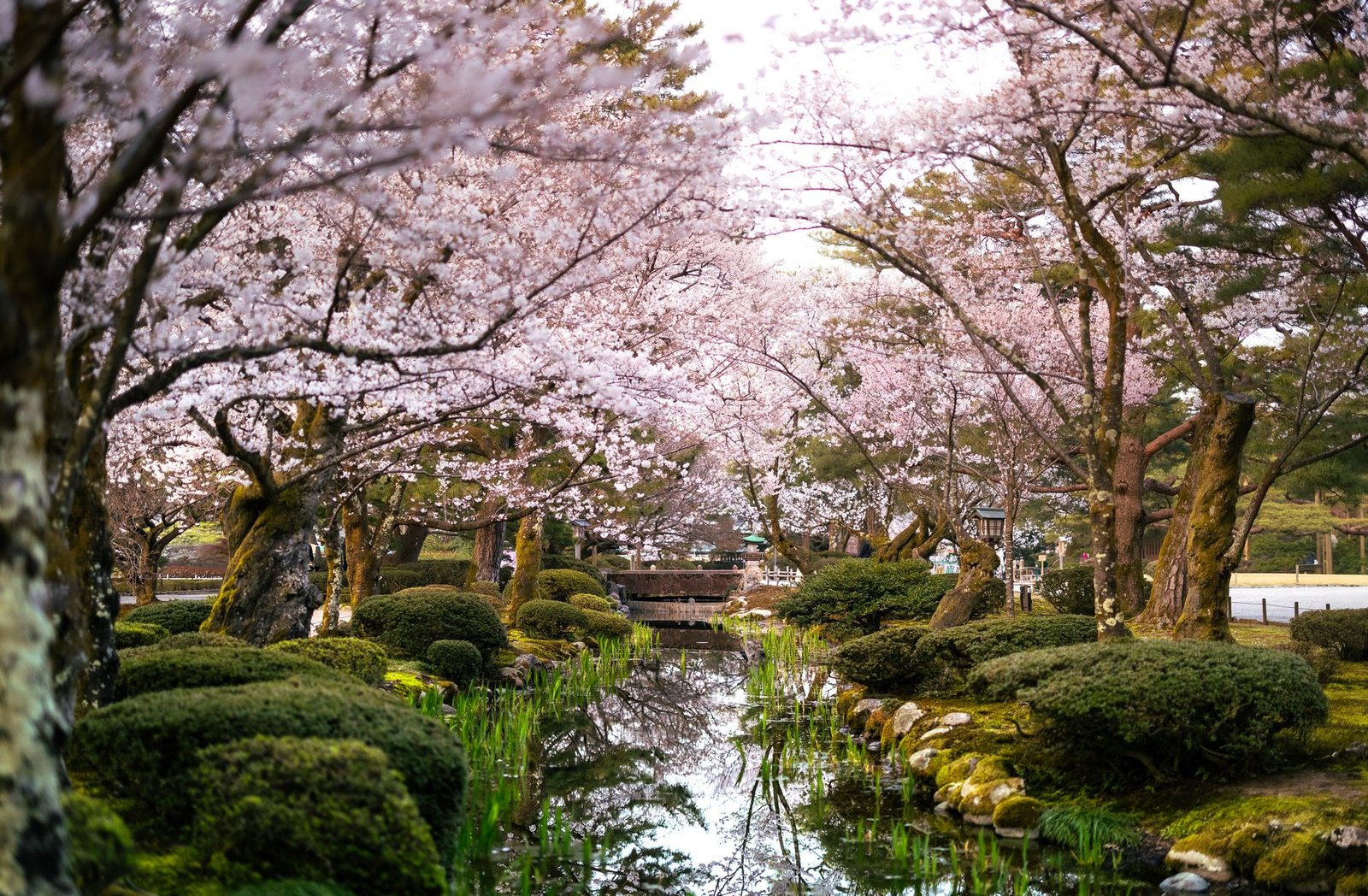
Then there’s Kenrokuen Garden. “One of Japan’s three most beautiful gardens,” the guidebooks declared, and frankly, I’ve heard that kind of hyperbolic praise before. Usually, I brace myself for something pleasant, well-maintained, but ultimately just… a garden. Kenrokuen, though, is something else. It’s sprawling, yes, but it’s also meticulously designed to offer a new vista at every turn. Paths meander over streams, past ancient trees, and around ponds so still they mirror the sky perfectly.
I went in autumn, and the maples were doing their thing, painting the landscape in shades of crimson and gold. But even beyond the seasonal show, there’s an incredible sense of space and tranquility. It’s the kind of place where you can spend hours just walking, discovering hidden tea houses, or simply sitting on a bench, watching the carp in the pond. It manages to feel both wild and perfectly curated, an impossible balance that it pulls off with effortless grace. It made me reconsider my entire approach to gardens. I thought I knew what a Japanese garden was; Kenrokuen showed me I really didn’t.
Samurai Legacies and Culinary Surprises
Kanazawa isn’t just about teahouses and gardens, though. The Nagamachi Samurai District was another quiet revelation. I pictured grand, imposing samurai residences, perhaps a touch intimidating. Instead, I found a neighbourhood of narrow, cobblestone streets lined with earthen walls, many still hiding private homes. You can visit a few samurai houses that are open to the public, like the Nomura House, which gives you a glimpse into their lives – not quite as austere as I’d imagined, but certainly dignified. The small, interior gardens within these homes were miniature masterpieces, offering a moment of calm reflection. It felt far more authentic and less “staged” than I’d anticipated, a genuine slice of history you could almost touch.
And the food? Kanazawa sits on the Sea of Japan, which means incredibly fresh seafood. I’d read about this, but reading and tasting are two very different things. The sushi here is exceptional, fresh beyond belief, and often surprisingly affordable compared to Tokyo. Beyond that, there’s a local specialty called jibuni, a duck stew thickened with wheat gluten, often served with seasonal vegetables. It’s hearty, comforting, and utterly delicious – a perfect antidote to a chilly evening. And of course, the city’s obsession with gold leaf extends to food, with everything from ice cream to soy sauce infused with edible gold. Touristy? Maybe a little. But also undeniably Kanazawa.
A City That Lingers
What sets Kanazawa apart is this feeling of unhurried elegance. It’s not trying too hard to impress. It simply exists, holding onto its traditions with a quiet pride. There’s a balance here – between the historic districts and the modern art museum, between the serene gardens and the lively market (Omicho Market is a feast for the senses, by the way). It never feels overwhelming, never feels like you’re just ticking off a checklist. Instead, it invites you to slow down, to explore, and to discover its charms at your own pace.
I arrived expecting a pretty, but perhaps a bit generic, Japanese city. What I found was a place with a distinct personality, a city that holds onto its past without feeling stuck in it. It’s a quiet beauty, one that might not scream for attention, but definitely earns it.
Practical Basics
Kanazawa is easily accessible by bullet train (Shinkansen) from Tokyo, making it a manageable addition to any Japan itinerary. It’s a remarkably safe city, like much of Japan, and navigating it is straightforward, with a good bus system and many attractions within walking distance of each other.
The best times to visit are generally during the spring (March to May) when the cherry blossoms are in bloom, and during the autumn (October to November) for the stunning fall foliage, particularly in Kenrokuen Garden. These seasons offer pleasant weather and showcase the city’s natural beauty at its peak. Summer can be hot and humid, while winter brings snow, which can lend a unique beauty to the landscapes but also colder temperatures.
Accommodation options range from modern hotels to traditional ryokans, offering choices for various budgets. While Japan can be perceived as expensive, Kanazawa offers good value, especially for food, compared to its larger counterparts.
Summary
If you’re looking for a taste of traditional Japan that feels a bit more authentic, a bit less trodden, and a lot more surprising than you might expect, then Kanazawa should be on your list. It’s a city that quietly impresses, proving that sometimes, the places you go into with the fewest expectations are the ones that leave the deepest impression.
Dreaming of India, or the world beyond it? TourZen.in plans it all with real itineraries. Message us on +91 70257 57330.
Image by: Marek Piwnicki\nhttps://www.pexels.com/@marek-piwnicki-3907296