The Quiet Side of China: A Trip to Kashgar
Kashgar exists, stubbornly, at the edge of things. You feel it as soon as you arrive, the long haul in—whether by plane or the surprisingly modern train that cuts across the vastness of Xinjiang. It’s not a place you just stumble upon. This is a destination you choose, deliberately, understanding that its very remoteness is part of its practical appeal. For anyone who’s spent too long in the interconnected blur of global cities, Kashgar offers a reset. It’s a place where the rhythms feel ancient, dictated by the sun and the movement of goods, rather than the relentless ping of notifications.
For centuries, this city was a critical junction on the Silk Road, a necessary stop for traders traversing the Taklamakan Desert. Think about the logistics of that: caravans laden with silk, spices, and precious metals, arriving dusty and weary, needing to resupply, rest, and perhaps exchange goods before pushing on. It wasn’t just a romantic idea; it was a brutal, practical necessity. And the echoes of that ancient hustle, that deep-seated purpose, are what make Kashgar still function today, albeit with modern adaptations.
The Sunday Market Ritual
The core of Kashgar’s enduring identity, and what truly pulls you into its current, is the Sunday market. It’s not just a market; it’s an institution, a weekly re-enactment of those Silk Road trading days. Forget your carefully curated farmers’ markets back home. This is raw, immense, and entirely functional.
You arrive to a cacophony that isn’t chaotic, but rather, a deeply organized system of exchange. Livestock first, then the dry goods, then the food stalls. It’s a sensory overload that somehow manages to make practical sense. You’ll see farmers, merchants, and buyers from all over the region, arriving in their pickup trucks, on motorcycles, or by donkey cart. The sheer volume of transactions happening is astounding.
Watching a sheep change hands, or a deal struck over a pile of vibrant spices, you realize this is the real economy, unvarnished. It’s a place where prices are negotiated with the seriousness of a seasoned diplomat, and trust is built on repeated interactions. It makes you consider how much of our own “modern” retail experience has distanced us from the fundamental act of trade. Here, it’s all out in the open, tangible.
After the livestock section, you move into an expansive area of textiles, household goods, and local crafts. Then, the food. Noodles, kebabs, dried fruits, fresh bread baked in tandoors. It’s not just sustenance; it’s a vital part of the market’s social fabric. People gather, eat, and discuss the day’s dealings. It’s an all-day affair, a cornerstone of the week, and to witness it is to grasp the very pulse of Kashgar.
Old City Observations
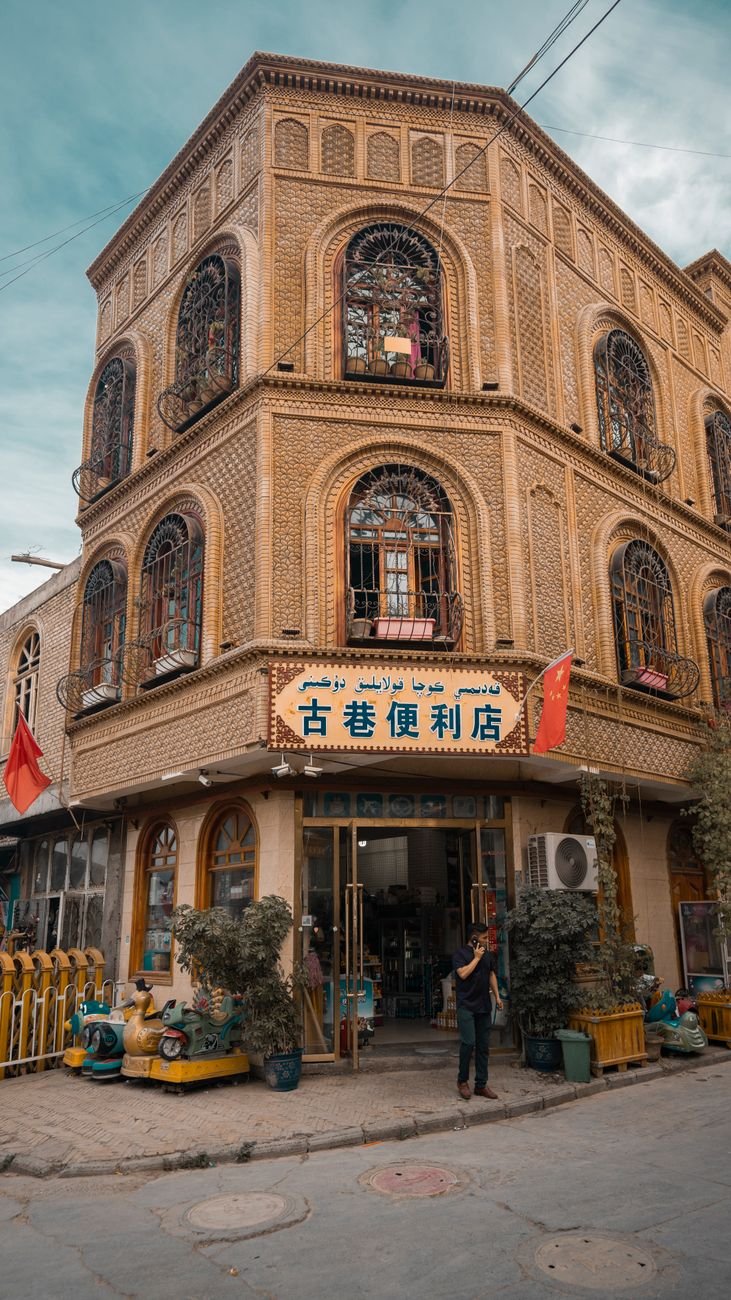
Beyond the market, the Old City of Kashgar, with its winding alleys and mud-brick homes, feels like stepping into a living museum. It’s not preserved for show; people live here, work here, continue daily routines that have likely changed little in their essence for generations.
Walking through, you hear the muffled sounds of life: children playing, the clatter of a meal being prepared, the soft murmur of conversations. The architecture, with its intricate doorways and enclosed courtyards, speaks to a different way of life, one that prioritizes privacy and community within its walls. It’s a quiet contrast to the bustling new city that now surrounds it, a reminder of what urban living used to be like before concrete and glass dominated the landscape.
The Old City is also where you might find small workshops, still producing traditional crafts. A potter at his wheel, a tailor at his machine, a baker pulling fresh bread from a clay oven. These aren’t tourist traps; these are people earning a living, continuing trades that are as old as the Silk Road itself. It’s the practical application of tradition, not just its performance.
Practical Basics
Planning a trip to Kashgar requires a clear understanding of the logistics. Firstly, the best time to visit is generally from **April to October**. During these months, the weather is more forgiving, making the outdoor market and explorations of the Old City much more comfortable. Winters can be harsh, with biting winds and low temperatures, which can impact the overall experience.
Visa requirements for China are standard for most foreign nationals. It’s crucial to secure your visa well in advance of your travel dates. The process can be detailed, requiring an itinerary, flight bookings, and accommodation details. Don’t leave this to the last minute; it’s a fundamental step that dictates the feasibility of your trip.
Connectivity is decent in Kashgar, with mobile networks and Wi-Fi generally available in hotels and some cafes. However, be aware of China’s internet regulations and consider a VPN if consistent access to certain international sites is essential for your work or communication. Payment systems are heavily reliant on mobile apps like WeChat Pay and Alipay, so having these set up and linked to an international card or a local account (if you can manage it) will make daily transactions significantly smoother. Cash is still accepted, particularly in smaller stalls, but digital payments are dominant.
When it comes to safety, Kashgar, like other parts of China, is generally secure. However, it’s always wise to exercise standard travel precautions: be aware of your surroundings, keep valuables secure, and respect local customs and regulations. The region has specific sensitivities, so being mindful and respectful of local culture is paramount.
Getting around Kashgar is relatively straightforward. Taxis are available, and ride-hailing apps are also widely used. For exploring the Old City, walking is often the best method, allowing you to truly absorb the atmosphere and navigate the narrower lanes. For the Sunday market, plan to spend several hours on foot.
The Enduring Appeal
Kashgar isn’t about luxury resorts or curated experiences; it’s about connecting with a place that still operates on principles that have sustained it for millennia. It’s about seeing, firsthand, how trade and community knit together to form a living, breathing city at the crossroads of Central Asia. The practicalities of getting there and navigating it are part of the journey, stripping away some of the superficiality that can sometimes accompany travel. What you’re left with is an honest, compelling encounter with a segment of the world that steadfastly holds onto its unique identity.
Plan your trip with TourZen.in – real itineraries, trusted local experts, one simple conversation.
Image by: Frank He\nhttps://www.pexels.com/@frank-he-69424754