Kep, Honestly Explained: A Traveler’s Guide
There are places in this world that whisper rather than shout, and Kep, a coastal town in Cambodia, is undeniably one of them. Most travelers, perhaps even you, haven’t heard its name whispered on the well-trodden paths of Southeast Asia. And yet, it holds a haunting, quiet beauty that resonates deeply, particularly for those of us who seek stories etched into the very landscape.
My first encounter with Kep wasn’t on a bustling beach or in a lively market, but rather amidst the skeletal grandeur of its abandoned villas. Sunlight, softened by the dense foliage, filters through broken windowpanes, illuminating dust motes dancing in the silent, empty rooms. These structures, once magnificent homes of the French elite and Cambodian royalty, now stand as elegant ruins, monuments to a bygone era and a tumultuous past. Their concrete shells, art deco curves, and grand staircases overgrown with vines, speak volumes without uttering a single word. It’s a profound silence, interrupted only by the rustle of leaves or the distant call of a bird, inviting you to slow your pace, to truly see, and to feel the weight of history that permeates the air.
Why It’s Been Overlooked
Kep’s current quietude is not accidental; it’s a consequence of history. Once a glittering seaside retreat known as Kep-sur-Mer, a rival to the French Riviera, its vibrant life was abruptly halted by the Khmer Rouge regime. The wealthy fled, and many of these beautiful villas were looted, damaged, or simply abandoned. For decades, Kep remained in a kind of suspended animation, a forgotten ghost of its former glory.
In a world that often celebrates the new and the shiny, Kep offers something more profound: a journey into the past, a space for quiet contemplation. It hasn’t been redeveloped into a sprawling resort town, nor has it been overrun by backpacker hostels and neon lights. Instead, it’s gently reawakening, preserving its unhurried charm and allowing visitors to experience a Cambodia that feels authentic and unpolished. This very stillness, this absence of a relentless push for modernity, is precisely why it often goes unnoticed by those who chase a faster pace.
What Makes It Worth the Detour
To experience Kep is to embrace a different rhythm of travel, one that rewards patience and a willingness to simply be. Beyond the melancholic beauty of the villas, there are other, equally captivating layers to uncover.
The Soul of the Crab Market
Perhaps Kep’s most famous, and certainly most delicious, draw is its legendary Crab Market. This isn’t just a place to eat; it’s a vibrant spectacle, a microcosm of local life. Arrive in the late afternoon as the fishing boats return, their catches spilling onto the wooden jetties. Women in conical hats haggle gently over piles of live blue crab, freshly caught from the waters of the Gulf of Thailand. The air is thick with the briny scent of the sea, mingled with the smoky aroma of grilled seafood and the sweet pungency of durian. Choose your crab, still feisty in its basket, and have it cooked on the spot with Kampot pepper, a local specialty. There’s an undeniable joy in savoring such freshness, a slow meal enjoyed with the sound of the waves and the chatter of local families.
Tranquility in Kep National Park
For those who find solace in nature, Kep National Park offers a serene escape. A well-maintained loop trail winds through lush jungle, offering glimpses of monkeys, exotic birds, and vibrant butterflies. As you ascend, the canopy opens to reveal breathtaking panoramic views across the sea, encompassing the emerald islands scattered offshore, and back towards the undulating hills of the mainland. It’s a walk that invigorates the senses, the earthy smell of the forest, the distant hum of insects, and the gentle breeze reminding you to breathe deeply and appreciate the simple majesty of the natural world.
Island Hopping to Rabbit Island (Koh Tonsay)
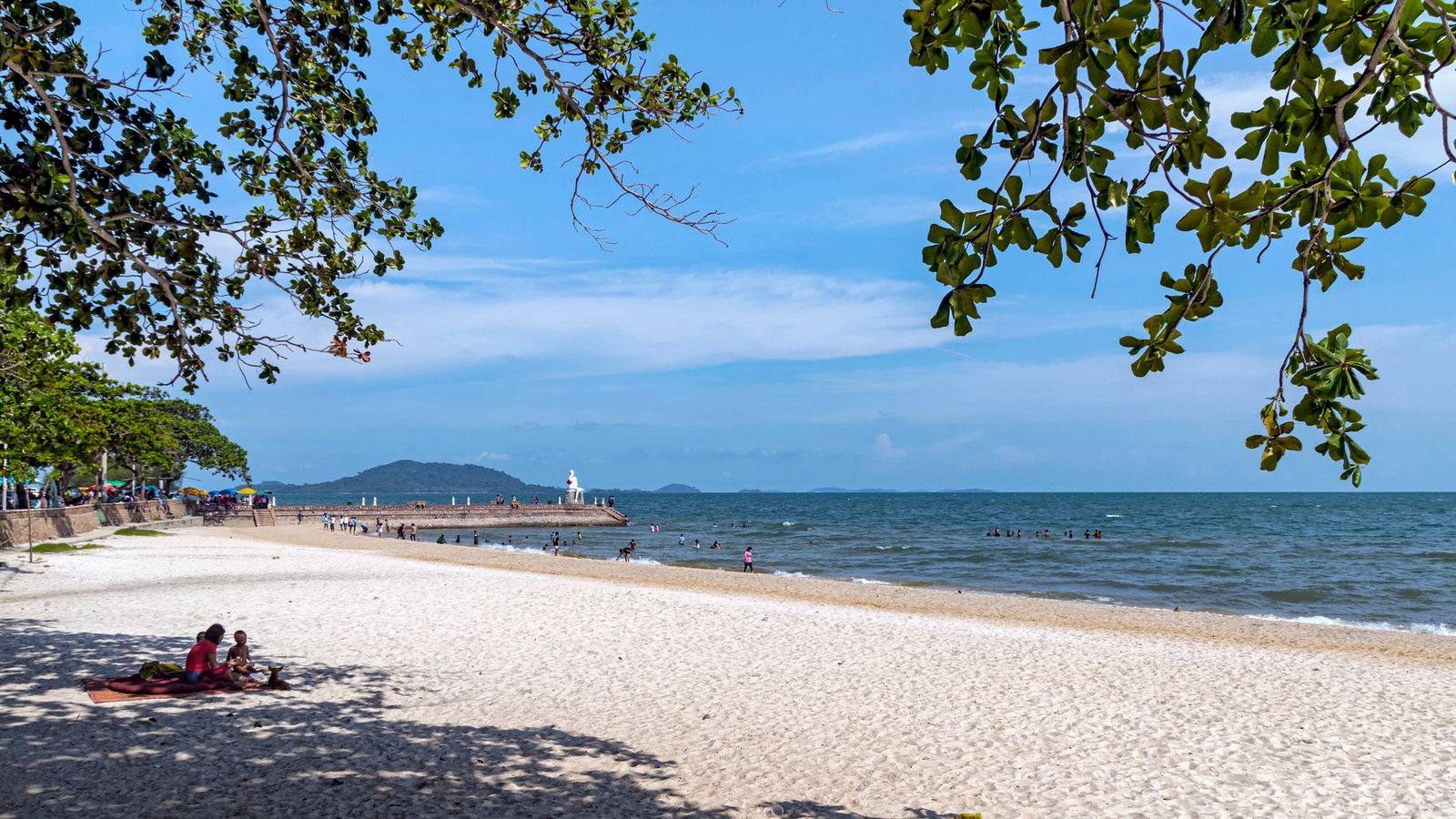
Just a short, leisurely boat ride from Kep lies Koh Tonsay, or Rabbit Island. This is the kind of undeveloped island retreat that feels increasingly rare. Think swaying palm trees, soft white sand, and calm, clear waters perfect for swimming. There are no fancy resorts here, just a handful of rustic bungalows and simple shacks serving fresh seafood. It’s the ideal place to unwind for a day, perhaps with a book, a nap in a hammock, and the complete absence of a schedule. The island exudes a timeless tranquility, a perfect counterpoint to the more bustling beaches elsewhere.
The Slow Pace of Life
What truly makes Kep special, for me, is its unhurried pace. Life here unfolds with a gentle rhythm, dictated by the tides and the sun. Mornings begin with quiet sunrises over the water, days drift by in exploration or relaxation, and evenings are marked by spectacular sunsets painting the sky in fiery hues. It’s a place that encourages you to linger, to watch the fishermen cast their nets, to sip a coffee slowly, to simply absorb the atmosphere. There’s no pressure to rush from one attraction to the next; instead, Kep invites you to discover its charm in your own time, at your own speed.
Practical Basics
- Best Time to Visit: The dry season, from November to March, offers pleasant temperatures and minimal rainfall, making it ideal for exploring and enjoying the outdoors.
- Getting There: Kep is easily accessible by bus or private taxi from Phnom Penh (around 3-4 hours) or Kampot (a much shorter, scenic 30-minute drive).
- Accommodation: You’ll find a range of options, from charming boutique guesthouses nestled in lush gardens to more simple bungalows, catering to various budgets.
- Food: Seafood is king, particularly the fresh blue crab with Kampot pepper. Don’t miss the local Khmer dishes, often prepared with fragrant herbs and spices.
- Getting Around: Kep is compact enough to explore by bicycle or tuk-tuk. Many guesthouses offer bike rentals, perfect for leisurely rides along the coast or into the national park.
Summary
Kep is not for the traveler seeking adrenaline-fueled adventures or a relentless party scene. It is, instead, a destination for the thoughtful wanderer, the one who appreciates history, values quiet beauty, and finds joy in the simple, authentic moments of local life. It’s a place where the past lingers gracefully in abandoned villas, where the sea yields its daily bounty, and where the rhythm of existence slows to a restorative pace. Take the detour to Kep, and allow yourself to be captivated by its understated, utterly unique charm.
Plan your trip with TourZen.in – real itineraries, trusted local experts, one simple conversation.
Image by: Văn Long Bùi\nhttps://www.pexels.com/@van-long-bui-1496562