Assisi: Where History’s Heart Beats in Pink Stone
There are towns that whisper their stories, and then there is Assisi, which seems to breathe them in a gentle, insistent rhythm. You arrive, perhaps, as the sun begins its slow descent, painting the Umbrian sky in hues of apricot and rose. It is then that Assisi truly reveals itself, not through grand pronouncements, but in the luminous glow of its famous pink stone, transforming every alleyway and ancient arch into a living, breathing canvas. This isn’t merely a backdrop; it is the very essence of Assisi, a place that rewards a slower gaze, an observant heart, and a camera ready to capture the quiet magic in between the famous sites.
Forget the hurried check-list; Assisi asks you to linger, to feel the weight of centuries beneath your feet, and to discover beauty in the way light catches a weathered fresco or illuminates a hidden courtyard. This is where history isn’t relegated to museums but lives on in the very fabric of the town, a gentle embrace for those willing to look beyond the obvious.
Golden Hour Glow: The Town’s Embrace
When the sun dips low, casting long shadows across the valley, the streets of Assisi come alive with a different kind of light. This is the moment to wander without aim, letting your feet lead you through the narrow, cobbled lanes. The pink Subasio stone, quarried from the mountain above, absorbs the day’s warmth and reflects the evening sky, giving the entire town an ethereal blush. Find a quiet spot along Via San Francesco, perhaps, or climb towards the upper town. The views over the patchwork fields of Umbria, shimmering in the twilight, are simply breathtaking.
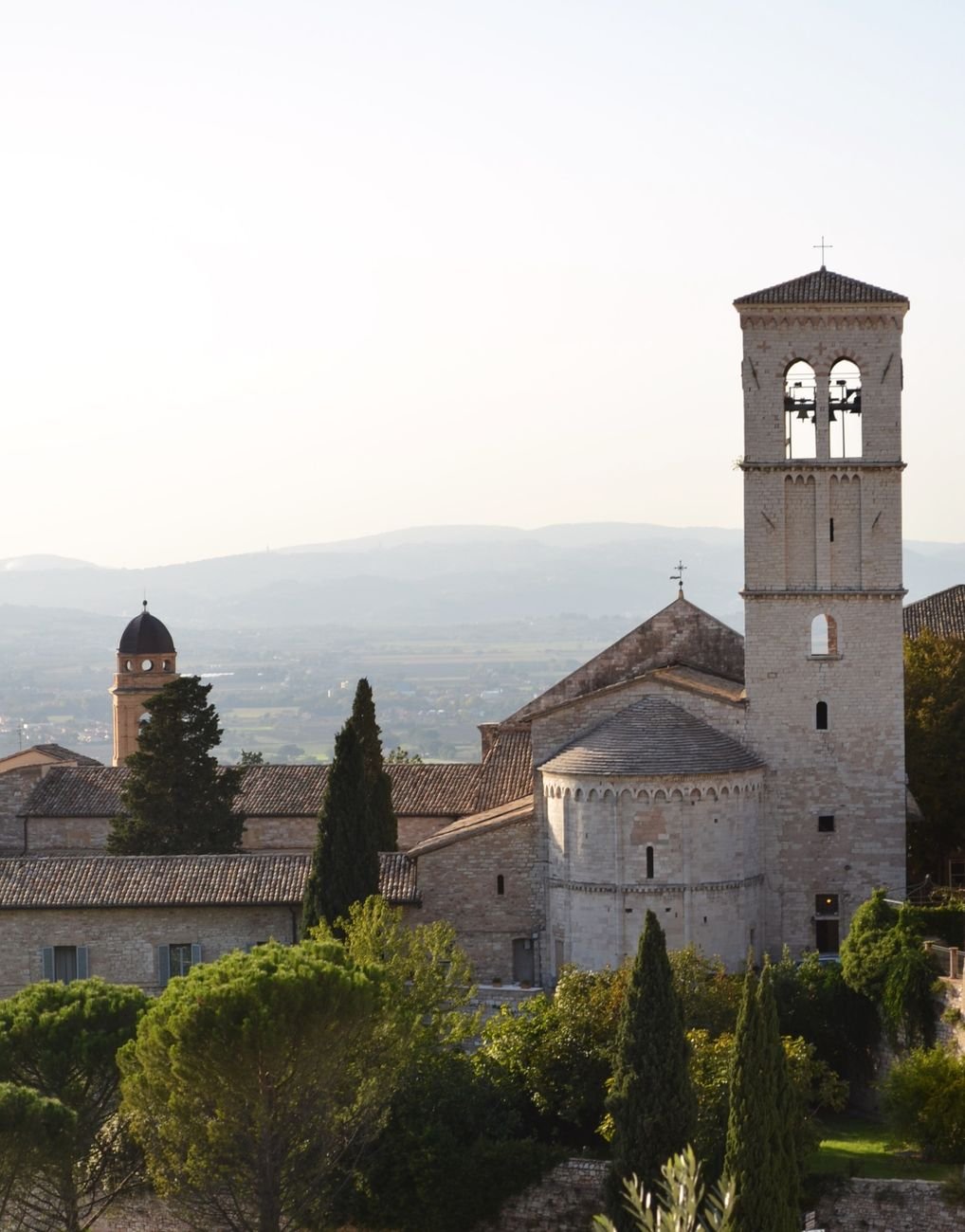
Pause at the Rocca Maggiore, the imposing medieval fortress that stands sentinel above Assisi. Even if the gates are closed, the vantage point from its base offers unparalleled panoramic views. Below, the Basilica of Saint Francis, a tiered marvel of architecture, seems to float against the deepening blue. This is not just a photograph; it’s a moment of connection, a feeling of timelessness as you stand where countless others have stood, gazing at a landscape steeped in myth and devotion.
First Light at the Basilica: A Spiritual Awakening
While Assisi’s fame is inextricably linked to Saint Francis, to experience the Basilica di San Francesco at dawn, before the crowds arrive, is to appreciate it as a profound work of art and a place of quiet contemplation, rather than solely a pilgrimage site. The intricate frescoes by Giotto and Cimabue, depicting the life of Saint Francis, unfold across the walls and ceilings of the Upper and Lower Basilicas. In the soft morning light, the colours seem to deepen, the expressions on the figures more poignant, revealing layers of narrative and emotion.
There’s a gentle hushed reverence that fills these spaces in the early hours. You can almost hear the echoes of ancient chants and feel the presence of the artists who poured their souls into these masterpieces. Take your time, letting your eyes trace the stories, absorbing the intricate details that tell not just of a saint, but of a man who found profound beauty in the natural world and compassion for all living things. It’s a reminder that even without deep religious conviction, the sheer artistry here is a testament to the human spirit’s capacity for devotion and creative expression.
Midday Merriment & Roman Echoes: Piazza del Comune
As the day brightens, descend into the heart of the town, the Piazza del Comune. This lively square is where ancient history mingles effortlessly with daily life. Dominating one side is the perfectly preserved facade of the Temple of Minerva, a remarkable Roman relic from the 1st century BCE. Its Corinthian columns stand testament to Assisi’s long and varied past, a silent observer to centuries of Umbrian life. Imagine the Roman citizens who once walked these very stones, their footsteps echoing where modern residents now sip espresso.
Just beside it stands the Torre del Popolo, the civic tower, and the Palazzo del Capitano del Popolo, both symbols of Assisi’s medieval independence. This is a prime spot for people-watching, for enjoying a leisurely lunch at one of the outdoor cafes, or simply soaking in the vibrant atmosphere. Explore the side streets leading off the piazza, where you’ll find artisan shops selling local ceramics, textiles, and delicious Umbrian specialties. Look for the little details – an ornate fountain, a weathered doorway, a colourful window box – each telling its own small story.
Beyond the Main Square: Seeking Serenity
For those who crave even more quiet, a short walk from the main thoroughfare leads to the Convent and Basilica of Santa Chiara. Its stripped-back Romanesque facade and the vibrant frescoes within offer a different perspective of Assisi’s spiritual heritage. The convent houses the crucifix that, according to tradition, spoke to St. Francis, and the remains of St. Clare, his devoted follower and founder of the Poor Clares. The open piazza in front provides another stunning view of the valley, a perfect place for quiet reflection.
Or, for a true step back in time, venture just outside the city walls to the Eremo delle Carceri, a hermitage nestled deep in a gorge on Mount Subasio. This tranquil sanctuary, where St. Francis and his followers retreated for prayer and meditation, feels remarkably untouched by time. The ancient oaks, the moss-covered stone, and the murmuring stream create an atmosphere of profound peace, a truly grounding experience away from the bustle of the town.
Practical Basics for Your Assisi Journey
Best Time to Visit: The shoulder seasons of April to June and September to October offer the most pleasant weather for exploring Assisi on foot. The spring brings blooming wildflowers, while autumn paints the Umbrian landscape in rich, warm hues. Summers can be quite warm, and winters, while quieter, can be chilly.
Safety: Assisi is generally a very safe town for visitors. As with any popular destination, exercise normal precautions against pickpocketing in crowded areas, especially around major tourist sites.
Costs: As a UNESCO World Heritage site and a significant pilgrimage destination, Assisi offers a range of accommodations and dining options. While it’s not a budget-basement destination, you can find good value, particularly for guesthouses and family-run trattorias. Entry to most churches and basilicas is free, though donations are always appreciated.
Visa Notes: Italy is part of the Schengen Area. Visitors from many countries can enter for up to 90 days without a visa for tourism purposes. Always check the latest visa requirements based on your nationality well in advance of your trip.
Summary
Assisi is more than just a place to visit; it’s an experience that settles in your soul. It’s the morning mist rising from the valley, the gentle hum of activity in the piazza, and the profound silence within the ancient walls. It’s a town that holds its history close, inviting you to wander, to observe, and to simply be. For those who seek a destination rich in culture, steeped in history, and utterly captivating to the eye, Assisi offers a unique blend of spiritual gravitas and everyday Italian charm. It is, truly, a destination for the discerning traveller, a jewel in Umbria’s crown that rewards every moment of your exploration.
Plan your trip with TourZen.in – real itineraries, trusted local experts, one simple conversation.
Image by: Glen Mc Call\nhttps://www.pexels.com/@glen-mc-call-1137859051